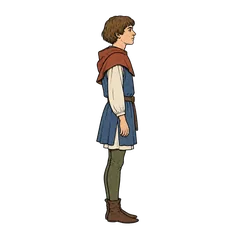
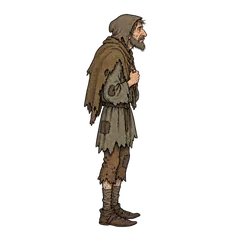
Medieval leper
If you were reborn as a medieval person with leprosy, your illness would reshape not just your body but your place in the world – set apart from your town, yet still within the Church’s care.
The disease itself
Leprosy, or Hansen’s disease, is caused by the bacterium Mycobacterium leprae, identified by Gerhard Armauer Hansen in 1873. It spreads slowly, probably mainly through droplets during long close contact, and most people are naturally resistant. It damages nerves, especially in the hands, feet and face, so that injuries go unnoticed; over years this can lead to ulcers, loss of fingers or toes and changes to the face. It is not, as legend says, a disease that makes limbs simply fall off, and it is not highly contagious.
Separated, not forgotten
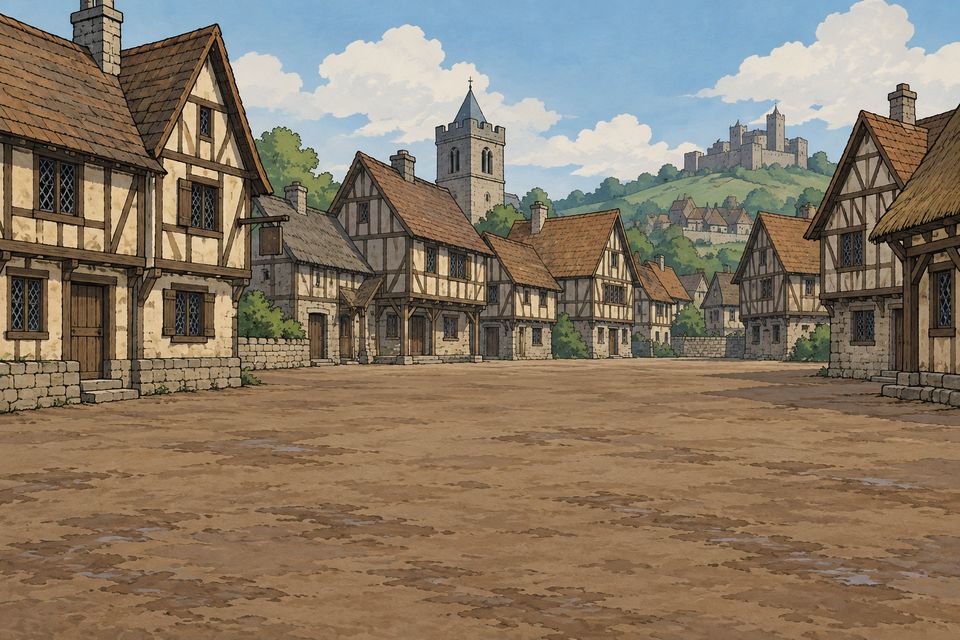
Medieval responses mixed fear with religious compassion. The Third Lateran Council of 1179 called for lepers to have their own churches and cemeteries. In many regions a person diagnosed with leprosy took part in a formal separation ceremony and then lived in a leprosarium – a leper house usually built outside town walls, often dedicated to St Lazarus or another saint. Thousands of such houses existed across Europe by the 13th century.
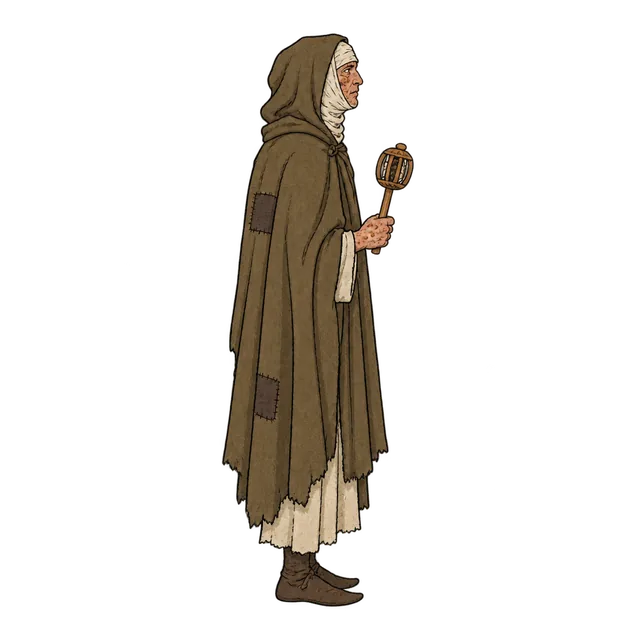
Residents typically lived under a rule like a religious community, praying for benefactors in return for food and shelter. When they went begging, many were required to wear distinctive clothing and sound a clapper or rattle – less a warning of contagion than a way to attract alms while keeping distance. Leprosy was seen both as a punishment and, paradoxically, as a sign of being close to Christ’s suffering.
What came after
Leprosy declined sharply in Europe from the 14th century, for reasons still debated. Ancient DNA from medieval skeletons shows the bacterium has barely changed genetically, and today leprosy is curable with multidrug therapy introduced by the World Health Organization in 1981 and provided free of charge.