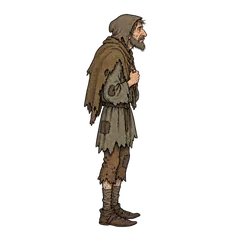
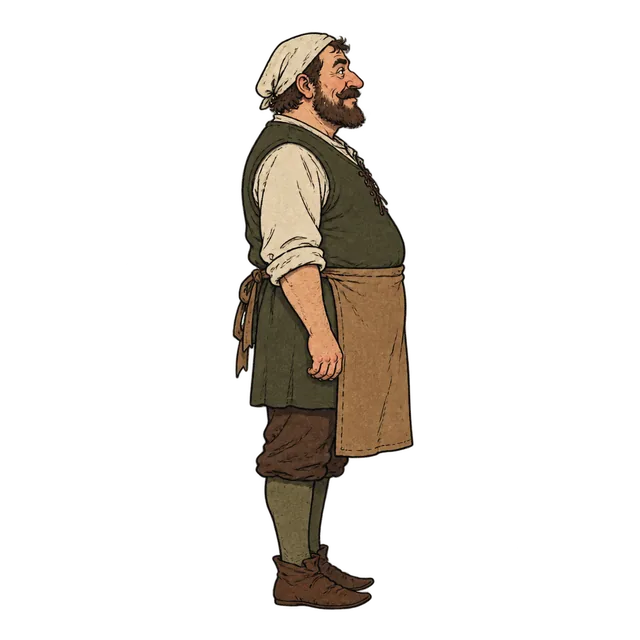
Medieval innkeeper
As an innkeeper you would hear every rumour on the road first – and spend half your life checking that nobody slipped away without paying.
Taverns, alehouses and inns
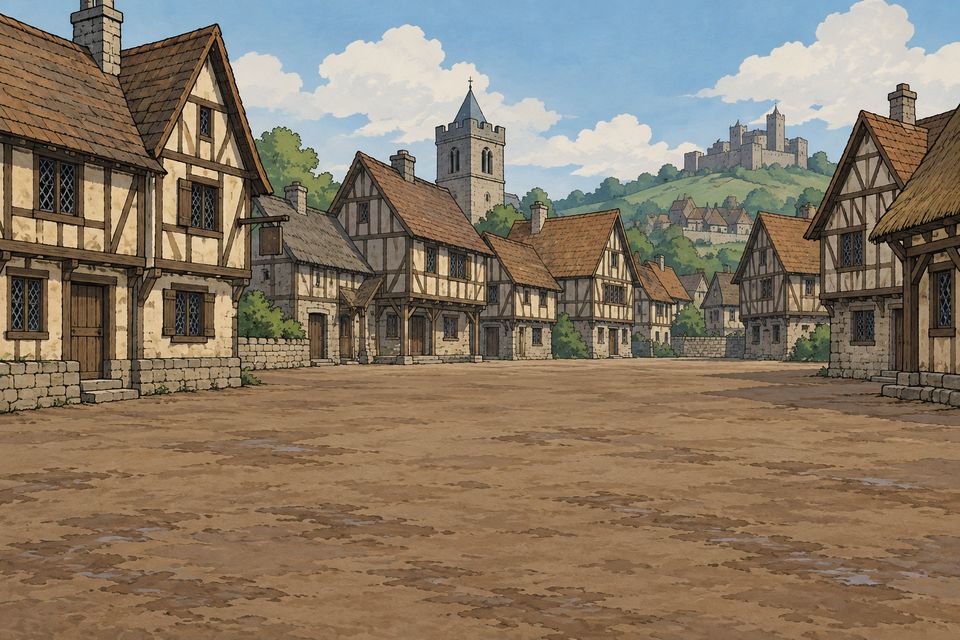
Medieval drinking and lodging places came in several kinds. The simplest was a village alehouse, often just a home where a woman brewed ale and hung a bush or pole over the door to show that a fresh batch was ready. Taverns in towns sold wine. Inns offered beds, meals and stabling for travellers, and grew in number along pilgrimage and trade routes from the 13th century onward.
Brewing was a large part of the job. Before hops became common in northern Europe in the later Middle Ages, English ale spoiled within days, so it was brewed constantly in small batches. Much of this work was done by women, the ‘alewives’, until brewing became a larger, more male-dominated business.
A night at the inn
Travellers did not expect privacy. Guests shared rooms and frequently beds with strangers; straw or feather mattresses might host fleas. The innkeeper supplied bread, pottage, meat on better days, fodder for horses and a fire. Merchants valued a trustworthy host who would guard their goods and could tell them about road conditions, prices and danger ahead. In Poland, the roadside karczma was often owned by the lord, who held the monopoly on selling alcohol, and leased to a tenant innkeeper.
Rules and risks
Authorities kept a close eye on the trade. English ‘assizes of bread and ale’ from the 13th century fixed prices and measures, and local officials, the ale-tasters, checked quality; selling short measures could earn a fine or worse. Inns could be blamed for fights, gambling and prostitution, and keepers were often required to report suspicious guests. Fire was an ever-present danger in timber buildings full of candles and hearths. Yet a well-placed inn on a busy road could make its keeper prosperous and influential.