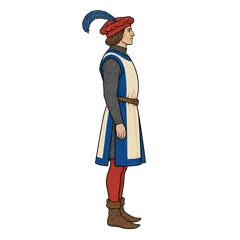
Medieval squire
As a squire you would polish armour, groom horses and carry your knight’s lance – all while learning, in sweat and bruises, how to become one yourself.
From page to squire
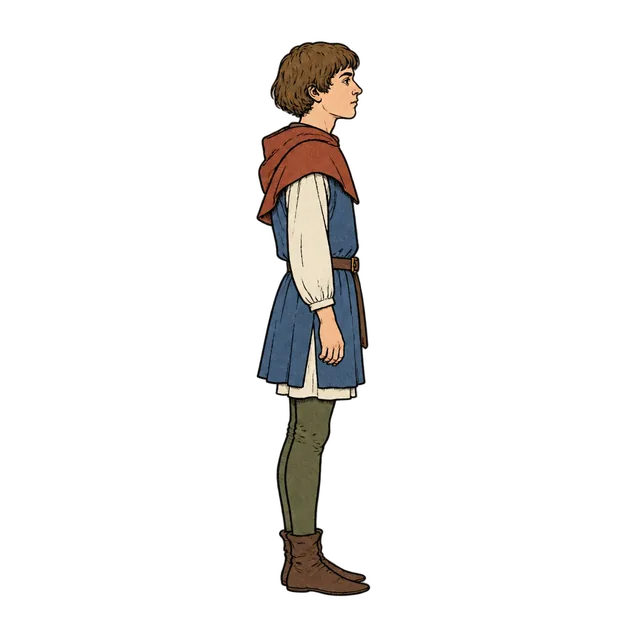
A noble boy destined for knighthood was often sent at around seven to serve in the household of a lord, where as a page he learned manners, riding and the basics of court life. In his early teens he became a squire – from the Old French escuier, ‘shield-bearer’ – attached to a particular knight. The arrangement was part apprenticeship, part networking: serving a powerful lord could open the doors to a good marriage and future patronage.
A squire’s workday
Duties were practical and endless. A squire cared for his master’s horses, cleaned and repaired mail and plate (mail was often scoured with sand to keep off rust), helped him arm – a process needing skilled help for full plate – served at table and carried messages. In between he trained hard: riding at the quintain, sword and lance drills, wrestling, hunting and running in armour.
In war, squires rode to battle with their knights, held spare horses and weapons, helped wounded masters off the field and often fought themselves. The risks were real, and many squires were killed or captured.
Dubbing – or not
Most squires hoped to be dubbed a knight around the age of 21, sometimes on the battlefield, more often in a ceremony that might include a vigil of prayer, a ritual bath and the girding of a sword belt and spurs. But knighthood became so costly that by the 13th and 14th centuries many well-born men remained squires for life, a respectable rank in its own right. In Poland, a similar figure was the giermek, and young nobles also learned the military trade in the retinues of magnates.