Crusader
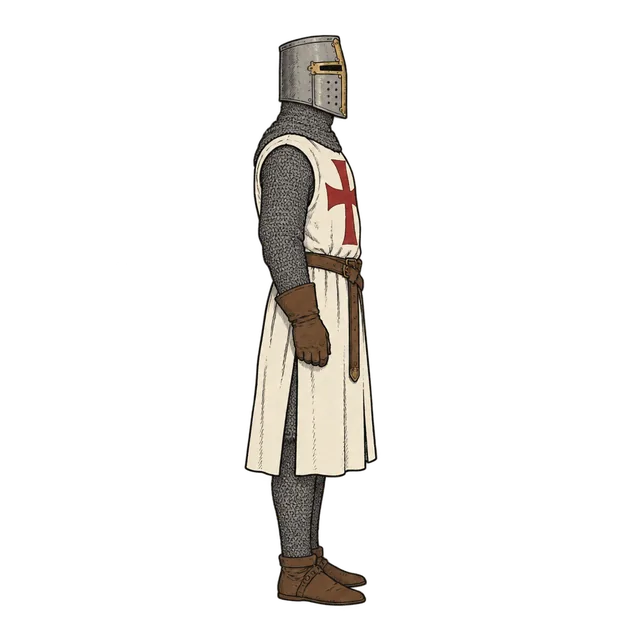
As a crusader you would swear a vow, sew a cloth cross onto your clothes and set out on a journey of thousands of kilometres from which many never returned.
Taking the cross
The crusades began when Pope Urban II preached at Clermont in 1095, calling Western Christians to aid Byzantium and take Jerusalem. Those who took a vow received a spiritual reward – the remission of penance for sins – plus practical privileges such as protection of their property and a pause on debts. Motives were mixed: genuine piety, the pull of pilgrimage, family duty, adventure and, for some, hopes of land or loot.
Going was ruinously expensive. Knights sold or mortgaged land to pay for horses, equipment and the journey, and most crusaders came home poorer, if they came home at all.
The long road east
The First Crusade marched overland through the Balkans and Anatolia, suffering heat, thirst, famine and disease; more crusaders probably died of illness and hunger than in battle. Jerusalem fell in July 1099 and its capture was followed by a massacre of many of its Muslim and Jewish inhabitants. Crusaders then established states in the Levant – Jerusalem, Antioch, Edessa and Tripoli – which survived in shrinking form until Acre fell in 1291.
Later crusades often went by sea, and the Fourth Crusade notoriously sacked Christian Constantinople in 1204 instead of reaching the Holy Land.
Crusades closer to Poland
Crusading was not only about Jerusalem. The Northern Crusades targeted the pagan peoples of the Baltic, and the Teutonic Order, invited by Duke Konrad of Masovia in the 1220s, conquered the Prussians and built a powerful state. That state became Poland’s chief rival, until its defeat at Grunwald in 1410 and its later decline. Polish dukes took part in eastern crusades too: Henry of Sandomierz travelled to the Holy Land in the 1150s.