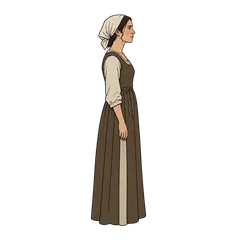
Medieval jester
As a court jester you would be the only person allowed to laugh at the king to his face – as long as you judged the moment, and his mood, exactly right.

Two kinds of fool
Courts kept two broadly different kinds of fool. ‘Artificial’ fools were skilled entertainers – singers, acrobats, jugglers, storytellers and wits – who played the fool as a profession. ‘Natural’ fools were people with intellectual disabilities or unusual behaviour, kept at court partly as entertainment and partly from a belief that such innocents were close to God. Their lives could be protected and comfortable, but they depended entirely on the goodwill of their patrons, and modern readers rightly find aspects of this troubling.
Licence to mock
A jester’s most famous privilege was frankness. Wrapped in jokes, he could point out unpleasant truths that courtiers dared not voice, puncture pomposity and make kings laugh at themselves. The licence had limits, though: overstep and a fool could be whipped or dismissed. Jesters also performed at feasts, travelled with their lords and sometimes acted as confidants.
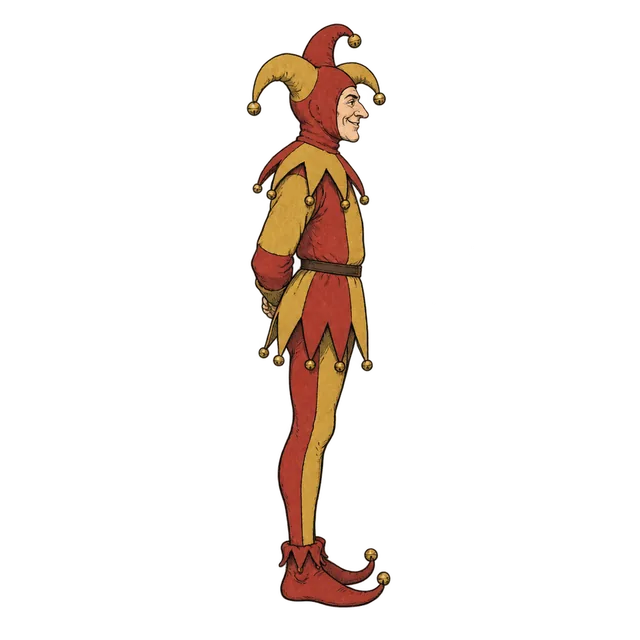
The familiar costume – motley in bright colours, the cap with ass’s ears or bells, and a mock sceptre called a marotte or bauble – became established mainly in the late Middle Ages and the Renaissance, and many real fools dressed more simply.
Stańczyk and friends
Poland’s best-known jester, Stańczyk, served at the Jagiellonian court in the early 16th century, under Sigismund the Old. Little is firmly documented about him, but he became a symbol of the wise fool who worries about the fate of the nation – thanks largely to Jan Matejko’s 1862 painting showing him brooding during a court ball. In England, Will Somers served Henry VIII and was reputedly one of the few who could lift the king’s temper.