Lactobacillus
As a Lactobacillus you would make your living by turning sugar into acid – and, almost by accident, give humanity yogurt, sauerkraut and sour pickles.

The acid strategy
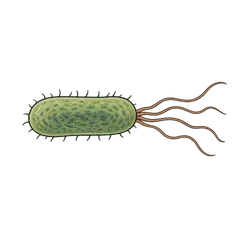
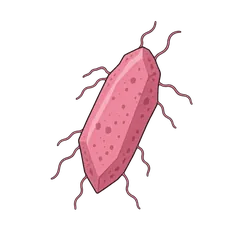
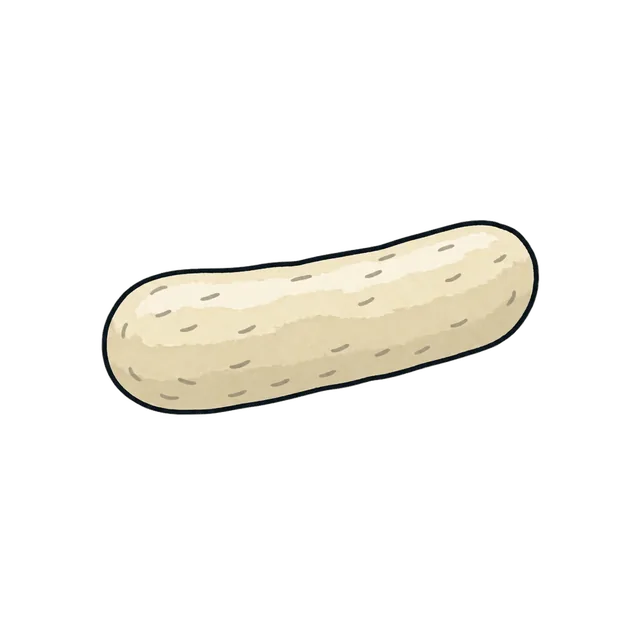
Lactobacilli are rod-shaped bacteria that ferment sugars into lactic acid. They do not need oxygen, but unlike many anaerobes they are not poisoned by it either. Your survival plan is chemical warfare: as you feed, the pH of your surroundings drops, and most competitors – including many spoilage and disease-causing bacteria – cannot cope with the acidity, while you can.
Your relatives live on plant surfaces, in milk, in the human mouth and gut, and in the vagina, where in many women lactobacilli dominate and their acid helps keep other microbes in check.
Kitchen career
Humans have been farming your kind for thousands of years without knowing it. Yogurt relies on Lactobacillus delbrueckii subsp. bulgaricus working alongside Streptococcus thermophilus; the bulgaricus partner was identified in 1905 by the Bulgarian student Stamen Grigorov. Sauerkraut, brine-fermented cucumbers, kimchi, kefir and sourdough bread all depend on lactic acid bacteria. Soon afterwards Élie Metchnikoff popularised the idea that soured milk might promote long life – an early, much simplified version of today’s probiotic research, whose health claims are still being tested strain by strain.
A family reshuffled
If you were reborn after 2020, your name might have changed. That year microbiologists split the old genus Lactobacillus, which had grown to over 250 species, into 25 genera based on genome comparisons. The yogurt bacterium kept the name; others became Lactiplantibacillus, Lacticaseibacillus and so on. Your life would end in one of two ways: swallowed and digested along with your sauerkraut, or – ironically – stopped by your own success, when the acid you produce rises high enough to halt even you.