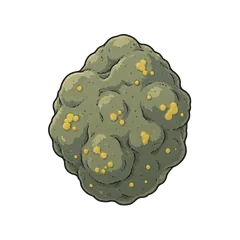
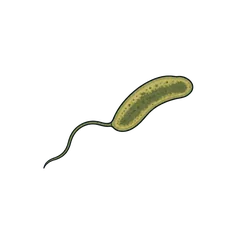
Haloarchaeon
As a haloarchaeon you would live in water so salty it would pickle almost anything else – and you would tint whole lakes pink while doing it.
Not a bacterium
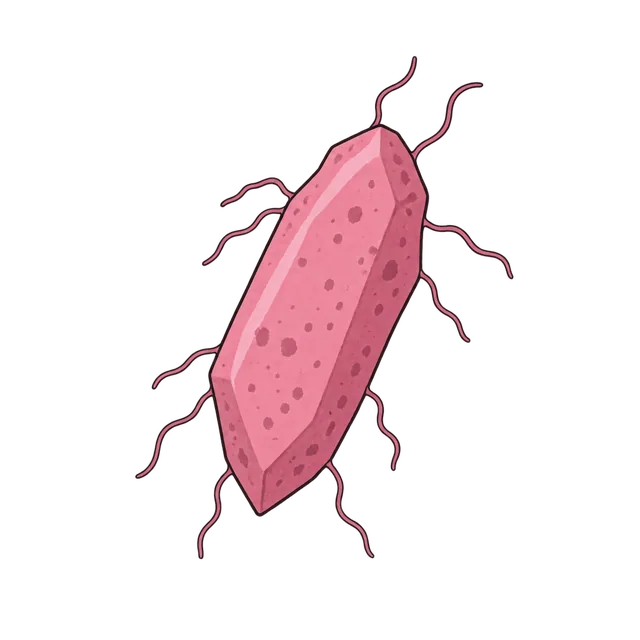
Haloarchaea look like bacteria under the microscope but belong to a separate domain of life, the Archaea, whose membranes and molecular machinery differ deeply from those of bacteria. They need salt to survive: most grow best in brine of 20–30 % salt, close to saturation, and many burst if placed in fresh water. You would find yourself in solar salt works, the Dead Sea, salt lakes in Australia and Senegal, and pockets of brine inside rock salt.
Shapes vary a lot. Some are rods or irregular blobs; Haloquadratum walsbyi, discovered in a Sinai brine pool in 1980, is flat and square, like a tiny postage stamp.
Pink, purple and light-powered
The red and pink of salt ponds seen from aeroplanes comes largely from haloarchaea and their carotenoid pigment bacterioruberin, along with the alga Dunaliella. Some species, such as Halobacterium salinarum, also carry patches of bacteriorhodopsin, a purple protein that uses light to pump protons out of the cell, giving it a second way to make energy when oxygen is scarce. Bacteriorhodopsin became a classic model for studying membrane proteins.
To avoid drying out in brine, you would fill your cell with potassium chloride, matching the salt outside; your proteins are built to work in that concentrated soup.
Patience in a crystal
When a pond evaporates, haloarchaea can become trapped in tiny fluid inclusions inside salt crystals. Researchers have recovered living cells from salt deposits, and some have claimed survival over geological time spans, though such ages remain debated because contamination is hard to rule out. In everyday life your threats would be viruses, which are abundant in brine, and the occasional rainstorm diluting your world below what you can bear.