Staphylococcus aureus
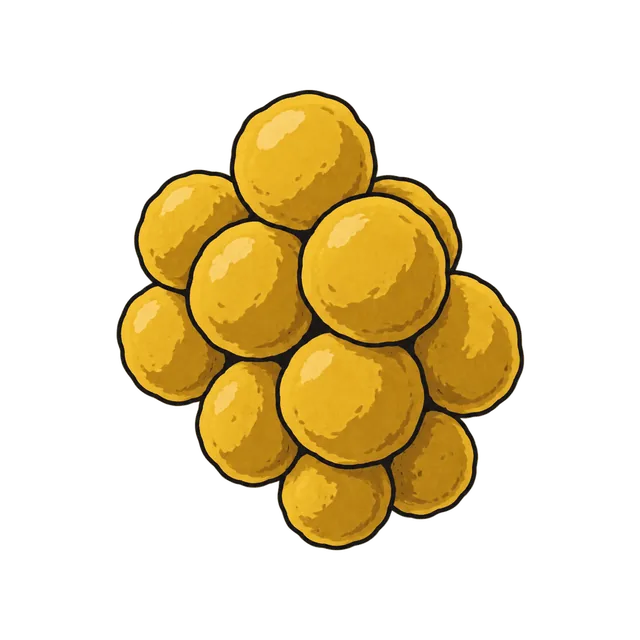
As Staphylococcus aureus you would spend most of your life quietly camping in someone’s nostril, part of a golden cluster that looks like a bunch of grapes. Only when the skin barrier breaks does your story get dramatic.

Grapes in the nose
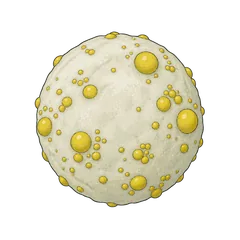
Staphylococcus aureus is a spherical bacterium about 1 micrometre across. Its cells divide in several planes and stay stuck together, forming the grape-like clumps that gave the genus its name (Greek staphyle, a bunch of grapes). The colonies are golden thanks to a carotenoid pigment, staphyloxanthin, which also helps shield the cells from oxidative attack by the immune system.
Your home would most likely be the front of the human nose: roughly a third of people carry S. aureus there at any given time without any symptoms. You tolerate salt and dry conditions well, so skin and indoor surfaces are survivable too.
When things go wrong
Given a cut, a hair follicle or a surgical wound, S. aureus can cause boils, impetigo and other skin infections, and less often serious illnesses such as bone or bloodstream infections. Some strains produce heat-stable toxins in food left warm for hours, causing sudden but usually short-lived vomiting – reheating does not destroy the toxin, so refrigeration is what matters. Most infections are treatable, and hand hygiene and good wound care prevent many of them.
A history with antibiotics
Your species has a famous place in medicine. In 1928 Alexander Fleming noticed that a mould contaminating his staphylococcus plates killed the bacteria around it – the discovery of penicillin. Staphylococci answered with resistance: penicillin-destroying enzymes spread within years, and methicillin-resistant S. aureus (MRSA) was reported in 1961, shortly after methicillin entered use. Today hospitals track MRSA closely, and rates have fallen in many countries thanks to infection control. As an individual cell, your life would most likely end being engulfed by a neutrophil or simply washed off during a shower.