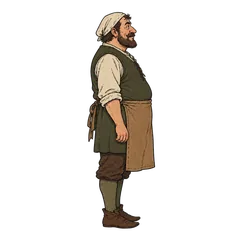
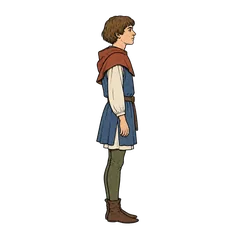
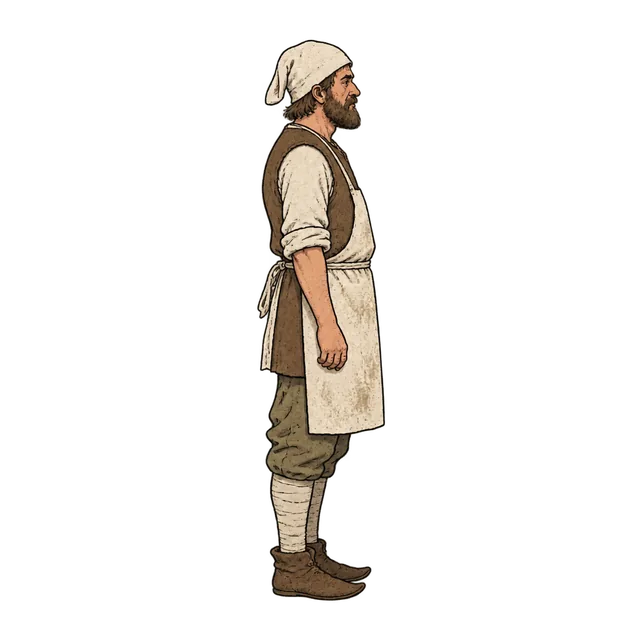
Medieval miller
As a miller you would run the most advanced machine in the village – and every neighbour who brought you grain would suspect you of keeping a little extra.
The village machine
Grinding grain by hand with a quern was slow, back-breaking work, so mills were among the most important technologies of medieval Europe. Water mills were already widespread: England’s Domesday Book of 1086 records around 6,000 of them. Windmills appeared in north-western Europe in the late 12th century. Early ones were post mills, whose entire wooden body was turned on a central post to face the wind.
Inside, a waterwheel or sails turned gears that drove a heavy upper millstone over a fixed lower one. The miller adjusted the gap to get finer or coarser flour, dressed the stones by recutting their grooves, and listened constantly for trouble – a mill running dry could overheat or even catch fire.
The lord’s monopoly
Mills were expensive to build, so they usually belonged to the lord or a monastery, and tenants were often required to grind their grain only at the lord’s mill – a right called ‘suit of mill’ in England and part of the banalités in France. Peasants who used hand querns at home could be fined. The miller ran the mill as an employee or tenant and took a share of the grain as payment, the multure, often around a sixteenth, though rates varied.
Honest miller, rare bird
Because he took his payment in kind and measured it himself, the miller was a stock figure of suspicion. Chaucer’s Miller in The Canterbury Tales has ‘a thumb of gold’ for cheating his customers. In fact, millers were often comparatively well off, with a house, a horse and ready food. Mills also hosted other work, since water power could drive fulling hammers for cloth, saws or bellows, so the miller sometimes sat at the heart of the local economy.