Euglena
As a Euglena you would refuse to choose between being a plant and an animal: you would photosynthesise in sunlight, swallow food in the dark and swim the whole time.
Neither plant nor animal
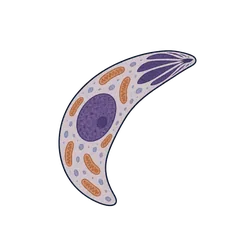
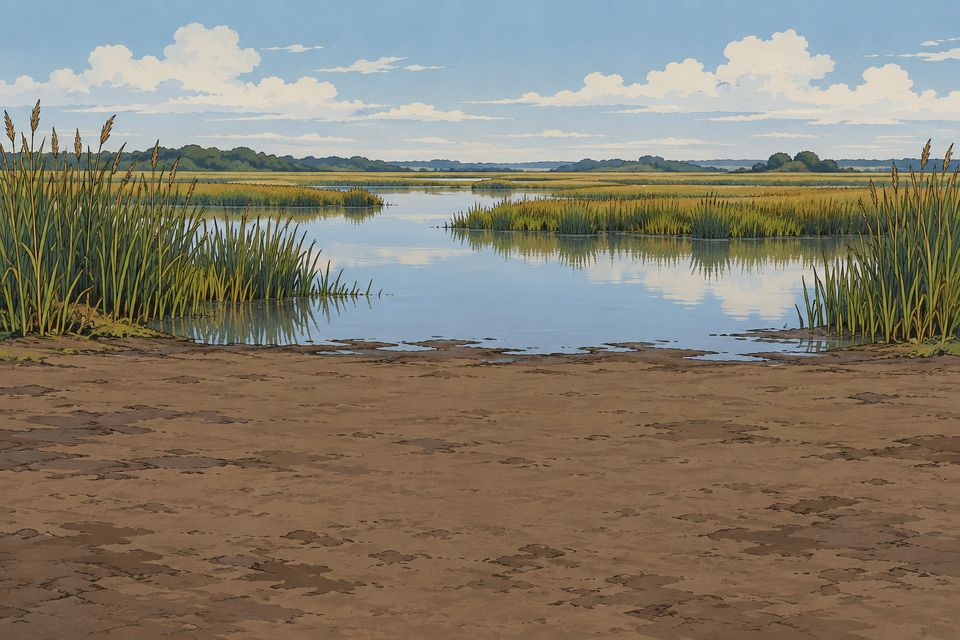
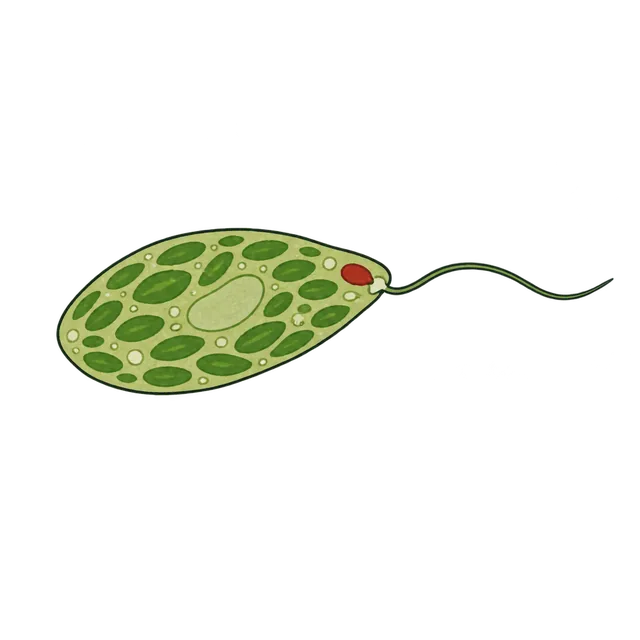
Euglena is a single-celled protist, usually 15–500 micrometres long depending on the species, common in nutrient-rich ponds, puddles and ditches – sometimes enough to turn the water bright green. It contains chloroplasts and makes food from sunlight, but it also swims actively and can absorb dissolved nutrients when light is scarce. In the 19th century this confused naturalists, who placed it in both the plant and animal kingdoms; today it sits in its own group, the euglenids.
Its chloroplasts came secondhand: an ancestor of Euglena swallowed a green alga and kept it, a process known as secondary endosymbiosis.
Seeing without eyes
Near the front of the cell is a red eyespot, the stigma, next to a light-sensitive swelling at the base of the flagellum. As you swim and rotate, the eyespot shades the sensor at regular intervals, which tells you which direction the light comes from, and you steer towards moderate light, ideal for photosynthesis. Instead of a rigid wall, you have a flexible protein pellicle, which lets many species perform a squirming, inchworm-like movement called euglenoid motion. If light gets too intense, you turn and swim away, protecting your chloroplasts from damage.
Storage, stress and survival
You would store energy as paramylon, a starch-like carbohydrate unique to euglenids, now studied as a dietary supplement and bioplastic material. When a puddle dries or the water turns cold, Euglena can form a thick-walled resting cyst and wait. Reproduction is by lengthwise division – no sex has been confirmed in euglenids. Predators include rotifers, small crustaceans and other protists, so most cells end as somebody’s lunch.