Toxoplasma gondii
As Toxoplasma gondii your life goal would be to get back inside a cat – the only animal in whose gut you can complete your sexual cycle – and almost every warm-blooded creature can be a stop along the way.

The cat connection
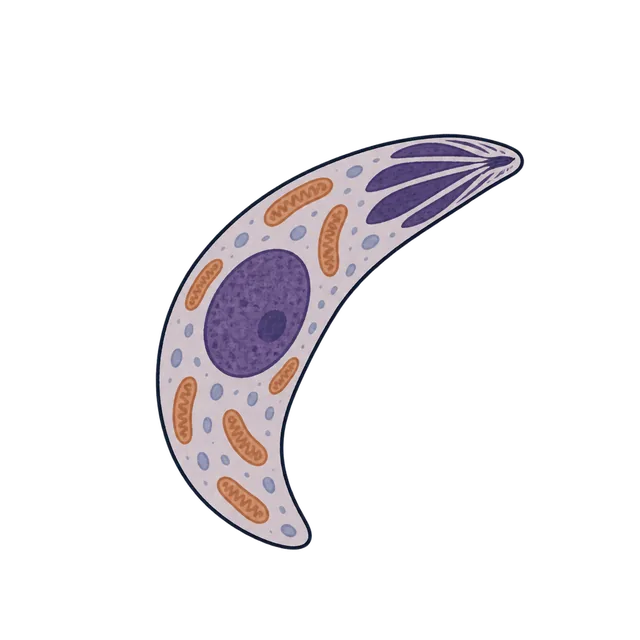
Toxoplasma is a single-celled parasite first described in 1908 from a North African rodent, the gundi, which gave the species its name. Cats, wild and domestic, are its definitive hosts: in a cat’s intestine the parasite reproduces sexually and the cat sheds millions of hardy oocysts in its faeces for one to three weeks, usually only once in its life. After a day or more in soil or litter, the oocysts become infectious and can survive for months.
Mice, birds, sheep, pigs and humans become intermediate hosts by swallowing oocysts from soil, water or unwashed produce, or by eating undercooked meat containing tissue cysts.
Life in a human
A large share of the world’s people – estimates are often around a quarter to a third, varying widely by country – have been infected. In healthy people the infection is usually unnoticed or feels like a mild flu; the parasite then settles into slow-growing cysts in muscle and brain, held in check by the immune system for life. It matters more in two situations: a first infection during pregnancy, which can harm the fetus, and severely weakened immunity, when dormant cysts can reactivate. Both are treatable, and screening programmes exist in several countries.
The mouse that lost its fear
Infected rodents in laboratory studies become less afraid of cat odour, which would help the parasite reach its next cat; this is one of the best-known examples of a parasite apparently altering host behaviour. Claims about effects on human personality are much less certain and still debated. Simple steps break your cycle: cooking meat thoroughly, washing vegetables, wearing gloves when gardening and changing litter daily, since fresh oocysts are not yet infectious – pregnant people are often advised to let someone else do it.