Knights Templar brother
As a Templar you would be half monk, half soldier – sworn to poverty and obedience, yet part of one of the richest institutions in medieval Europe.
Monks with swords
The Order of the Poor Fellow-Soldiers of Christ and of the Temple of Solomon was founded around 1119–1120 in Jerusalem to protect pilgrims on the roads of the Holy Land. It took its name from its headquarters on the Temple Mount. Recognised at the Council of Troyes in 1129 with the support of Bernard of Clairvaux, it combined religious vows of poverty, chastity and obedience with a life of fighting.
Under the Rule
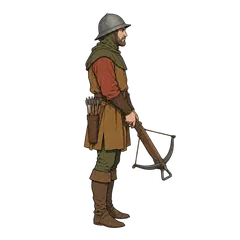
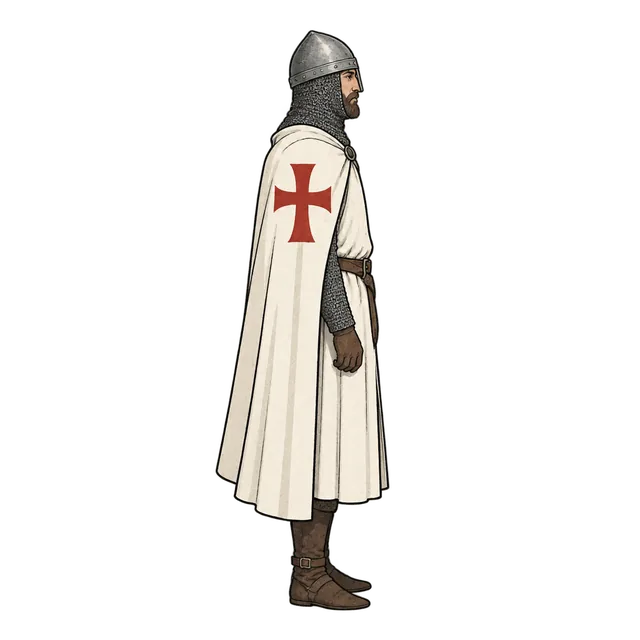
A Templar brother’s life was strictly regulated. Knight brothers, who had to be of knightly birth, wore the white mantle; sergeants, from lower social ranks, wore black or brown. The red cross was granted around 1147. Brothers ate together in silence, attended the daily offices, could own nothing personally and needed permission for almost everything. In battle they were forbidden to retreat unless the odds exceeded three to one, and they gained a reputation as disciplined, fearsome troops.
Most Templars, though, never saw the Holy Land. The majority lived in commanderies across Europe – farms and estates that raised money, horses and recruits for the East.
Bankers, and a brutal end
Thanks to donations and good management, the order became a financial powerhouse. Pilgrims could deposit money in one commandery and withdraw it in another, and the Templars lent to kings. That wealth helped doom them. In 1307, King Philip IV of France, deep in debt, had the Templars in France arrested; under torture many confessed to heresy and blasphemy. Pope Clement V dissolved the order in 1312, and the last Grand Master, Jacques de Molay, was burned in Paris in 1314. Historians today regard the charges as largely fabricated.