Spinosaurus
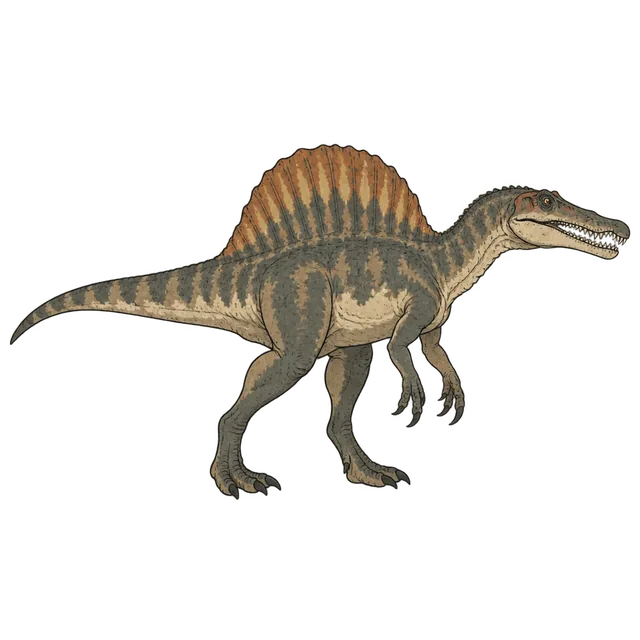
As a Spinosaurus you would spend your days around the great rivers of Cretaceous North Africa, crocodile snout pointed at the water and a sail on your back that could be seen from a long way off.
A river system full of giants
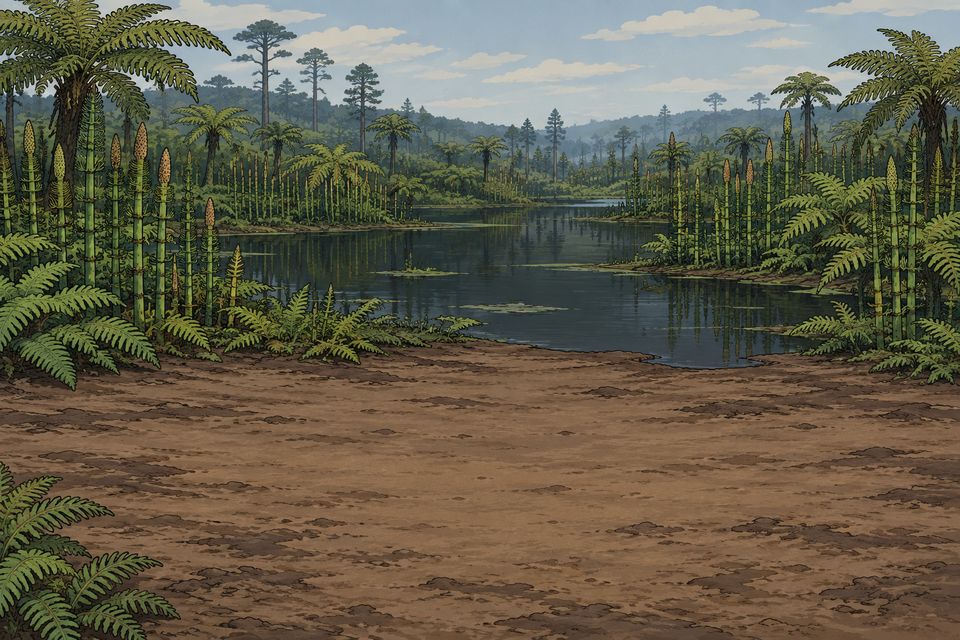
You live roughly 100–94 million years ago in a vast delta-and-river landscape that is now the Sahara, preserved in Morocco’s Kem Kem beds and in Egypt. The water teems with huge fish – sawfish-like Onchopristis, giant lungfish and coelacanths – and you share the banks with other big predators such as Carcharodontosaurus.
Your skull is long and low with conical, interlocking teeth, ideal for gripping slippery prey. Length estimates sit around 14 metres, but body mass estimates vary enormously between studies. Your nostrils sit far back on the snout, so you could keep breathing with the tip of your jaws in the water, and small pits at the end of the snout may have housed pressure sensors for detecting fish movement, as in crocodiles. Your hind legs were short compared with other giant theropods.
Swimmer or wader?
This is one of palaeontology’s liveliest disputes. A 2020 study described a deep, paddle-like tail and argued you were a tail-propelled swimmer; a 2022 study of your dense bones suggested you foraged underwater. Other researchers counter that your sail made you unstable in water and that you were more like a giant heron, wading in shallows and snatching fish. The evidence currently supports a heavily water-dependent animal; how much time it spent fully submerged is unresolved.
The fossil that was bombed
The first Spinosaurus bones were collected in Egypt and described by Ernst Stromer in 1915. They were destroyed when an Allied air raid hit the Munich museum in April 1944. For decades your appearance was reconstructed from Stromer’s drawings and photos, until new finds in Morocco from 2014 onwards gave a fuller picture. The sail itself was made of neural spines up to about 1.6 metres tall; display is the most widely accepted explanation.