Dilophosaurus
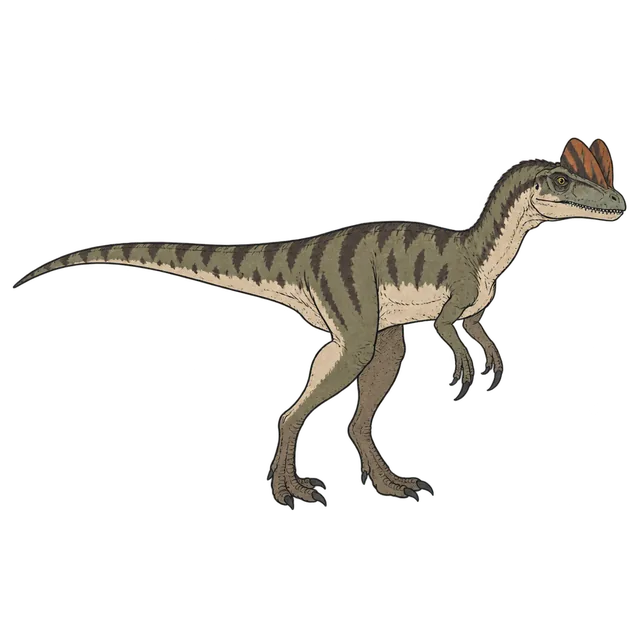
As a Dilophosaurus you would be one of the biggest predators of the Early Jurassic, wearing two thin crests on your head – and, sorry to disappoint, neither a frill nor a venomous spit.
Arizona, 190 million years ago
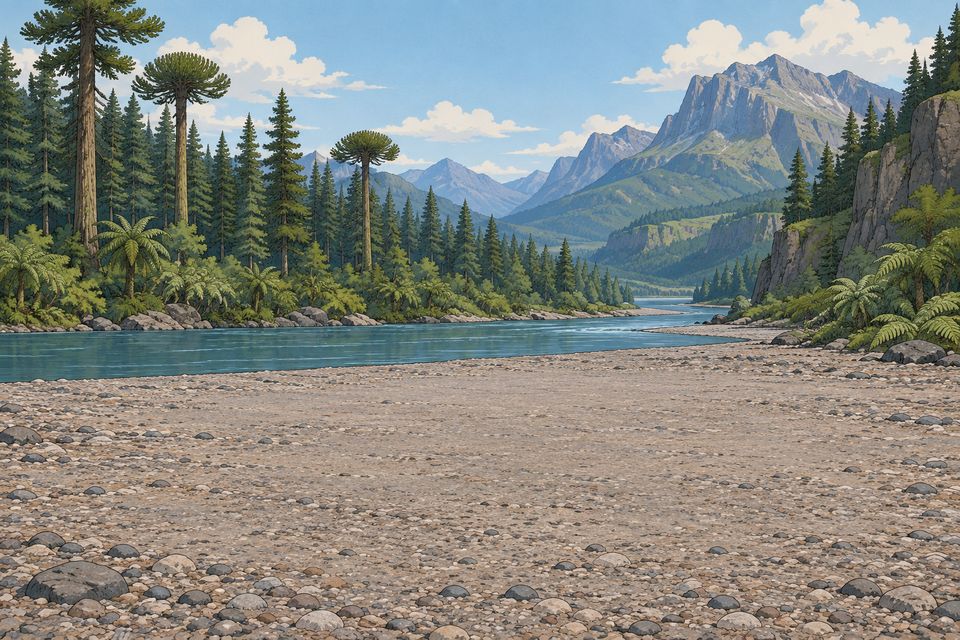
You live in the Early Jurassic, roughly 193–183 million years ago, in what is now northern Arizona. The rocks of the Kayenta Formation record rivers winding across a landscape that was drying out, with sand dunes not far away. Your neighbours include the small armoured Scutellosaurus, the long-necked plant-eater Sarahsaurus, early mammal relatives and turtles.
At about 7 metres long and a few hundred kilograms, you are the largest land predator of your ecosystem. A notch in your upper jaw gives your snout a kinked look. Fossil footprints of large theropods are common in Early Jurassic rocks of the American Southwest, and some may have been left by animals like you. One famous trackway site in Utah preserves resting traces of a big theropod, crouched on the ground with its hands and hips touching the mud.
Crests, not frills
Your two paper-thin crests run along the top of your skull. They were too fragile for fighting and were most likely used to show off to rivals and mates. The neck frill and venom spray seen in Jurassic Park came from the novel and the film; there is no fossil evidence for either.
A 2020 redescription showed that your jaws were stronger than once thought, and that you were a capable hunter of animals your size, not just a fish-eater or scavenger.
Bones that tell of hard knocks
The original skeletons were found in 1940 on Navajo Nation land, and described by Samuel Welles in 1954 as a species of Megalosaurus before receiving their own name in 1970. One specimen shows multiple injuries – fractures, infections and a deformed arm – that healed over time, meaning the animal survived for months or years after they happened.