Allosaurus
Come back as an Allosaurus and you inherit the Late Jurassic’s busiest predator job – plenty of prey, plenty of competition, and a decent chance that a Stegosaurus tail will one day ruin your week.
The Morrison world
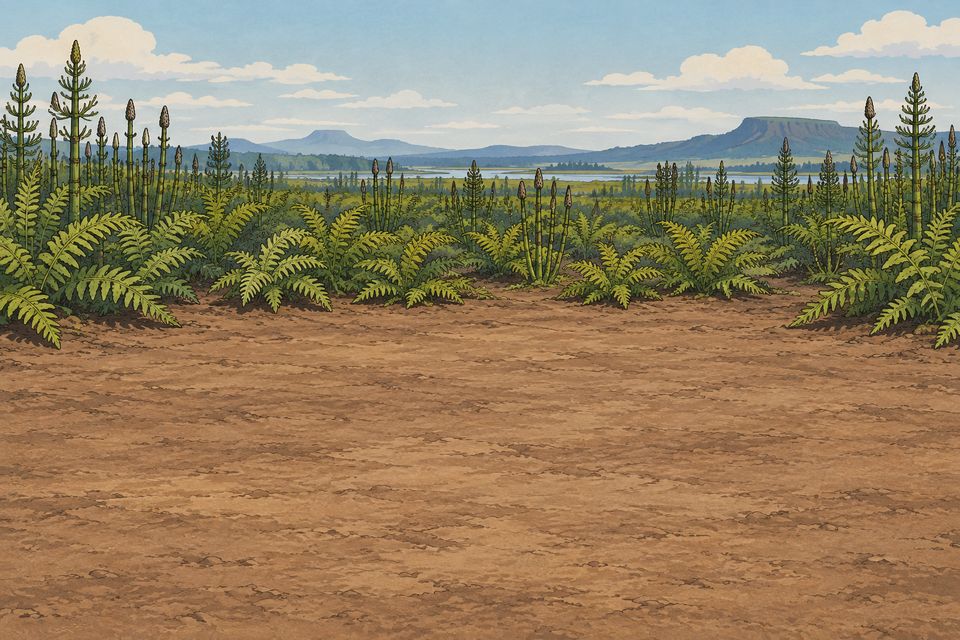
You live around 155–145 million years ago on the seasonal floodplains of what is now the western United States, a landscape preserved in the rocks of the Morrison Formation. It is semi-arid, with a long dry season, river corridors lined with conifers, ferns and cycads, and giant sauropods such as Apatosaurus, Diplodocus and Brachiosaurus wandering between them. Close relatives of yours lived in Portugal too.
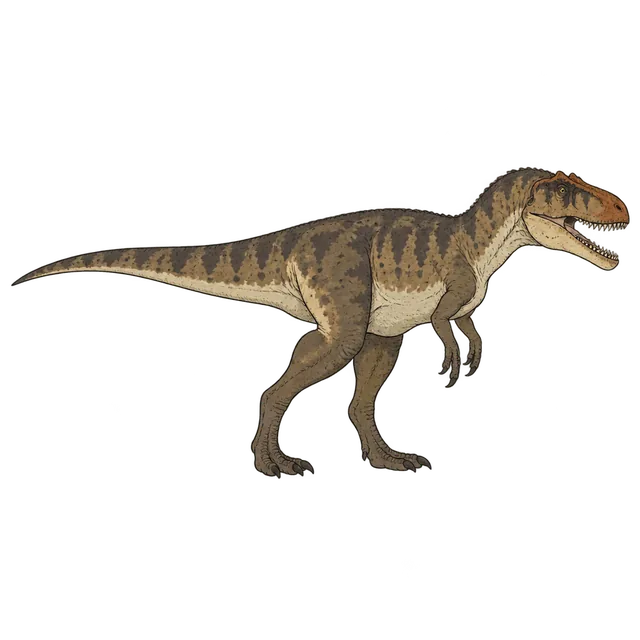
Adults reach about 8.5–9.5 metres and perhaps 1.5–2 tonnes. Over each eye sits a small rough horn, likely for display rather than combat.
Hunting with a hatchet
Your skull is light but very strong, and your bite muscles are, for a predator your size, surprisingly modest. Computer models suggest you attacked with an open-mouthed slash, driving the upper teeth into prey like a hatchet and tearing flesh away, rather than crushing bone like a tyrannosaur. Juvenile sauropods, Camptosaurus and Stegosaurus were all on the menu.
Stegosaurus fought back. One Allosaurus tail vertebra carries a hole that matches a Stegosaurus tail spike almost perfectly. Teeth were replaced throughout life, so shed Allosaurus teeth turn up around many Morrison carcasses. Grip with the three-fingered hands, each tipped with a large curved claw, probably helped hold prey while the jaws did their work. Juveniles were long-legged and slender, and may have hunted smaller, quicker animals than the adults did.
A body full of scars
If you survive, expect damage. The specimen nicknamed Big Al shows broken ribs, a damaged foot and infections – around 19 injuries in all – and it died before reaching full adult size. The Cleveland–Lloyd Quarry in Utah has yielded remains of more than 40 Allosaurus, possibly animals trapped in a muddy waterhole, though whether you ever hunted in groups remains unproven.