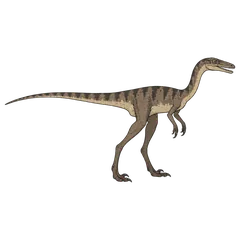
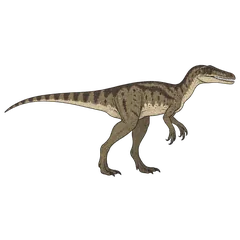
Compsognathus
Reborn as Compsognathus, you are small enough for an Allosaurus to step on without noticing – a quick, slim hunter of lizards on the sun-baked islands of Jurassic Europe.

Island life on a tropical sea
Around 150 million years ago, southern Germany and France lay under a warm, shallow sea dotted with low islands. Behind the reefs sat salty, oxygen-poor lagoons whose fine mud preserved animals in astonishing detail – today’s Solnhofen limestone. You hunt among dry scrubby vegetation on the islands, sharing them with Archaeopteryx, lizards and insects, while pterosaurs fly overhead.
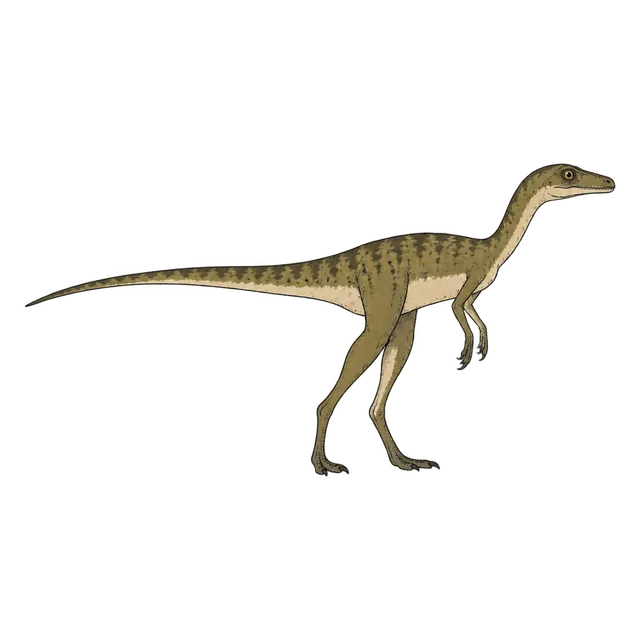
You are about a metre long, much of it tail, and weigh perhaps under 3 kilograms – roughly a chicken with a very long tail and a mouth full of small, sharp teeth.
Lunch, preserved
The German specimen has the skeleton of a small, long-tailed lizard, Bavarisaurus, inside its ribcage. A lizard that fast and alert suggests you relied on speed and sharp eyesight to catch prey. Long hind legs and hollow bones fit a nimble sprinter. Insects and other small animals were probably on the menu too.
Your hands had two strong clawed fingers and a tiny third one. A small, sharp-eyed sprinter like you had plenty of enemies itself: larger predators and possibly pterosaurs would have been happy to make a snack of you, so staying alert was a full-time job.
A small dinosaur with a big role
Compsognathus was described in 1859, the same year as Darwin’s On the Origin of Species, and Thomas Henry Huxley later used it to argue that birds and dinosaurs were related. For over a century it was the smallest known dinosaur. No feathers survive on its fossils, but its close relative Sinosauropteryx from China had a coat of fine filaments, so you were probably fuzzy too.