Smilodon (sabre-toothed cat)
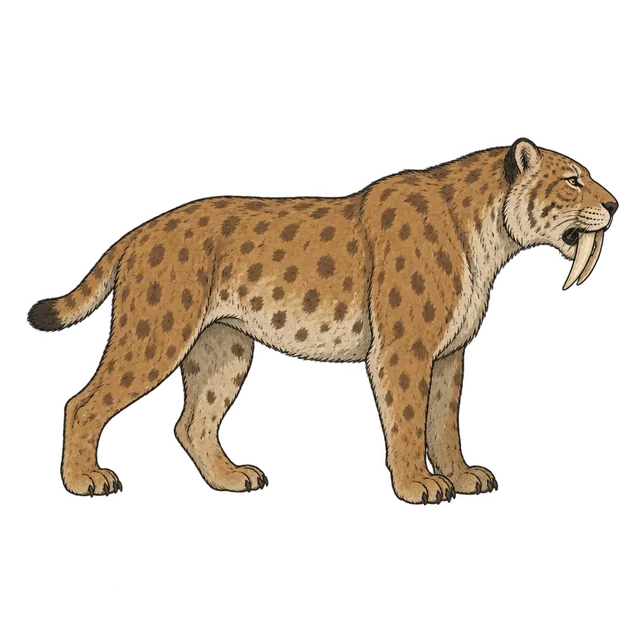
If the wheel makes you Smilodon, you will be a heavy-shouldered ambush hunter with two dagger-like canines, so long that your jaw has to open to about 110 degrees to use them.
Sabres and muscle
Smilodon was not a tiger or close relative of living big cats; it belonged to a separate, extinct branch of the cat family, the machairodonts. The largest species, Smilodon populator of South America, may have weighed 220–400 kg, while the well-known North American Smilodon fatalis was around 160–280 kg. Your upper canines could reach about 28 cm in S. populator, though much of that was root inside the skull.
You had a short tail, powerful forelimbs and a robust neck – a build for wrestling prey to the ground rather than chasing it over long distances.
How to use sabres
Your bite was relatively weak for a cat of your size, and long canines could break against bone. Most researchers think Smilodon pinned prey with its forelimbs and then delivered a precise bite to the throat. Prey would include bison, horses, ground sloths and young mammoths. Some La Brea fossils show healed injuries that would have kept an animal from hunting for a while, which has been taken as a hint that Smilodon may have been social, though this is debated.
Many Smilodon skeletons from La Brea show arthritis and old wounds, a reminder of how physically demanding this way of hunting was.
Tar pits and extinction
Smilodon lived from about 2.5 million to around 10,000 years ago. The La Brea Tar Pits in Los Angeles have produced remains of more than 2,000 individuals, likely because predators were drawn to animals trapped in the asphalt and got stuck themselves. Smilodon disappeared at the end of the last ice age, together with many of the large mammals it hunted. It is the state fossil of California.