Glyptodon
As Glyptodon you would spend your life under a domed shell the size of a small car, grazing the pampas slowly and relying on armour rather than speed.
A living dome
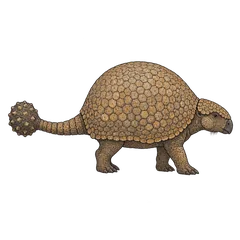
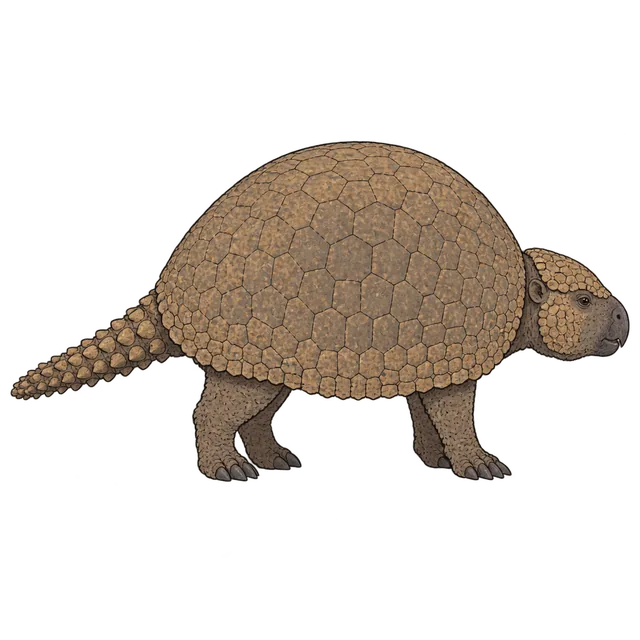
Glyptodon was a cingulate, a giant relative of today’s armadillos. Large individuals reached about 3 m in length and perhaps 1.5–2 tonnes. Your back was covered by a rigid shell made of more than 1,000 small, interlocking bony plates called osteoderms, each about 2.5 cm thick. Unlike an armadillo, you could not roll up; instead you had a bony cap on top of your head and a tail encased in rings of armour.
Your legs were short and stout to support the weight, and your vertebrae were partly fused to help carry the shell.
Grazing on the pampas
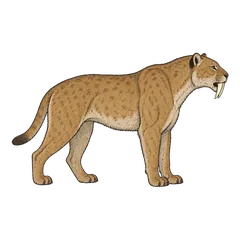
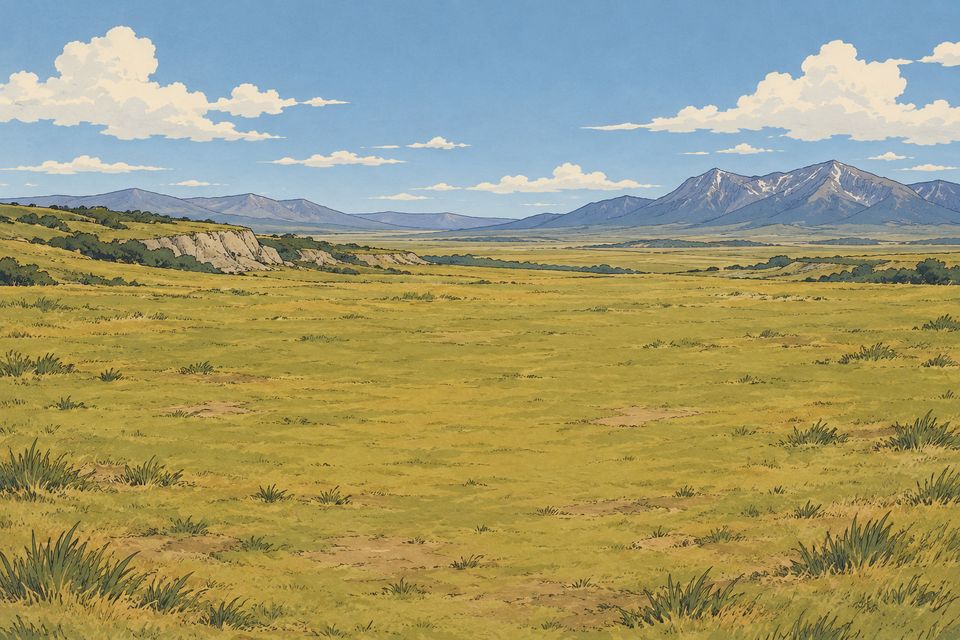
You were a herbivore, grazing on grasses and other low plants in open grassland and near rivers and lakes. Your deep jaws and grinding teeth suggest a diet of tough vegetation. Few predators could get through your shell, but Smilodon and other large carnivores may have targeted young or exposed parts. Males may also have fought each other with their armoured tails.
Your shell would also protect you from the weather, but it made you slow and could easily overheat you in the sun, so you may have rested in shade or water during the hottest hours.
Shells and early humans
Glyptodon originated in South America and spread north into Central America during the Great American Biotic Interchange, after the Isthmus of Panama formed. It disappeared around 10,000 years ago. There is evidence that early humans in South America hunted glyptodonts, and some sites show glyptodont shells that may have been used as shelters, though this interpretation is debated. Ancient DNA from a related glyptodont confirmed in 2016 that they are a branch within the armadillo family.