Medieval queen
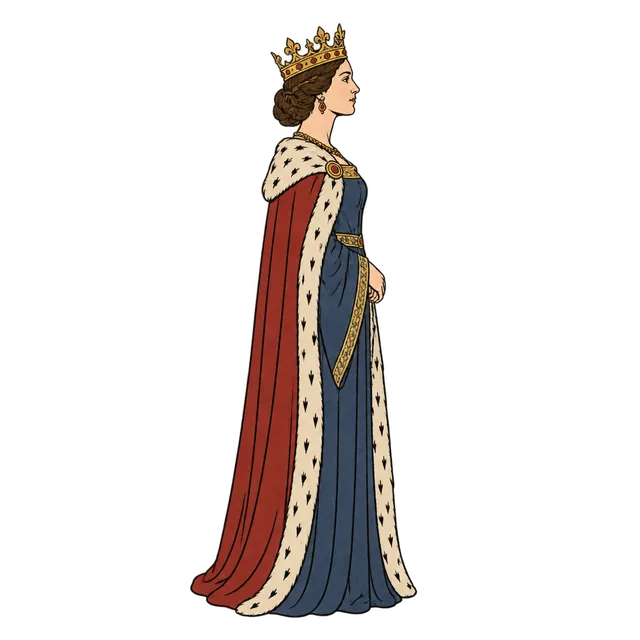
As a medieval queen you would probably have been married off as a teenager to a stranger in a foreign land – and then expected to keep a dynasty, a court and sometimes a kingdom running.

Married for a treaty
Royal marriages were instruments of diplomacy, sealing alliances, ending wars or bringing territory into a dynasty. Brides were often betrothed as children and sent abroad in their teens, with a dowry, a retinue and the task of learning a new language and court customs. The first duty was clear: to bear children, ideally sons. Childbirth itself was one of the greatest dangers a queen faced, and many died young from it.
Power behind and on the throne
Queens wielded real influence through patronage, intercession and household management. They founded monasteries and hospitals, sponsored art and literature, arranged their children’s marriages and pleaded with their husbands on behalf of petitioners. When kings were away, ill or dead, queens often acted as regents for young sons.
A few ruled in their own right or nearly so. Eleanor of Aquitaine (c. 1122–1204) was queen of France and then of England, and a major political player into her seventies. In Poland, Jadwiga of Anjou was crowned in 1384 as ‘king’ – rex – to stress that she was the sovereign, not merely a consort.
Jadwiga’s story
Jadwiga came to Kraków at about ten years old. Her marriage in 1386 to Jogaila of Lithuania, who became Władysław II Jagiełło, created the Polish–Lithuanian union and led to Lithuania’s Christianisation. She was known for charity and left her jewels to restore the Kraków Academy, refounded in 1400. She died in 1399 shortly after giving birth to a daughter who did not survive – a stark reminder of the risks that came with the crown. She was canonised in 1997.