Pulmonoscorpius
If the wheel lands on Pulmonoscorpius, you become a scorpion roughly the length of your arm, stalking the undergrowth of a Scottish forest that was then near the equator.
Body of a giant
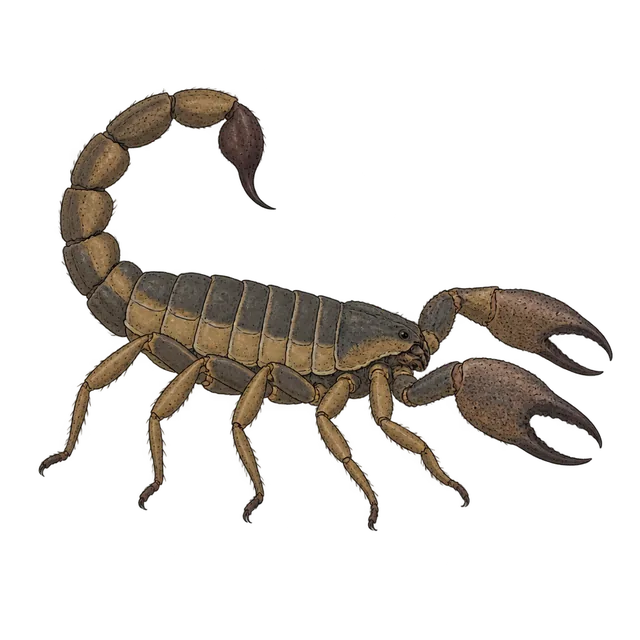
Pulmonoscorpius kirktonensis is known from the Early Carboniferous, about 335 million years ago, and is estimated to have reached around 70 cm in length. You would look broadly like a modern scorpion: a pair of grasping pincers, eight walking legs, a segmented abdomen and a tail ending in a stinger. Whether that sting was venomous cannot be confirmed from fossils, but living scorpions all use venom, so it is a reasonable bet.
The name means “lung scorpion”. You breathed through book lungs, stacks of thin plates that exchange gases with air – a sign that you lived on land rather than in water like some earlier scorpion relatives.
Hunting in the forest
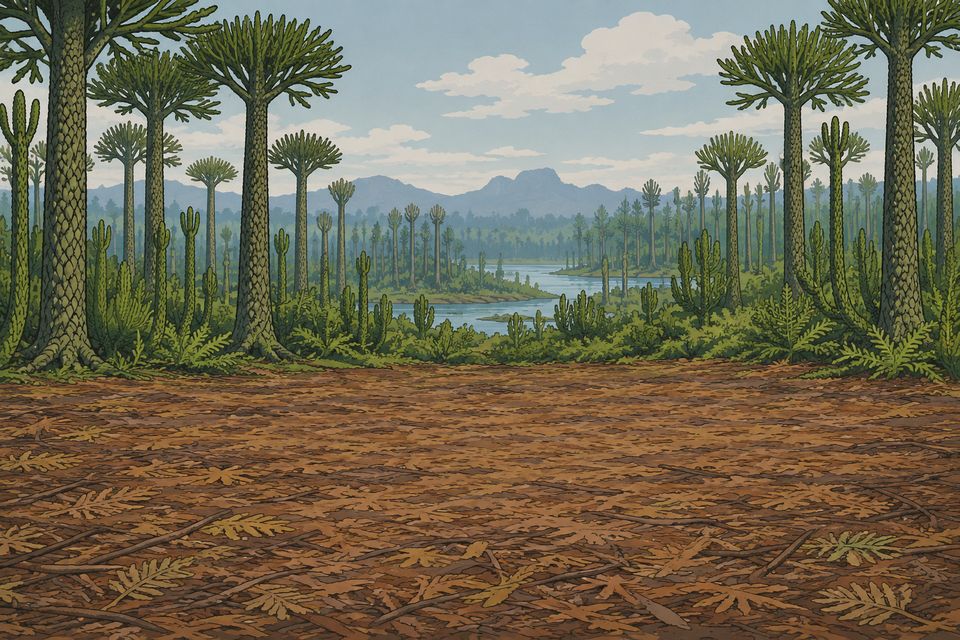
Your world was a tropical landscape of lakes, forests of early trees and volcanic hot springs. Prey could include insects, other arthropods and perhaps small early tetrapods. Like modern scorpions, you would probably rely on touch and vibration more than sight, and could survive long periods without food, waiting in shelter until something wandered close.
Your main dangers would be early amphibians and larger arthropods – and, as with all arthropods, the vulnerable hours after moulting.
A window called East Kirkton
All known fossils come from East Kirkton Quarry near Bathgate in West Lothian, Scotland. This site preserved an unusual snapshot of early land life, including some of the earliest known reptile-like tetrapods, amphibians, millipedes and eurypterids. Scotland at the time lay close to the equator, which explains the warm, lush setting.
Only a handful of fragmentary specimens have been described, so its full appearance is partly reconstructed from better-known scorpions.