Eryops
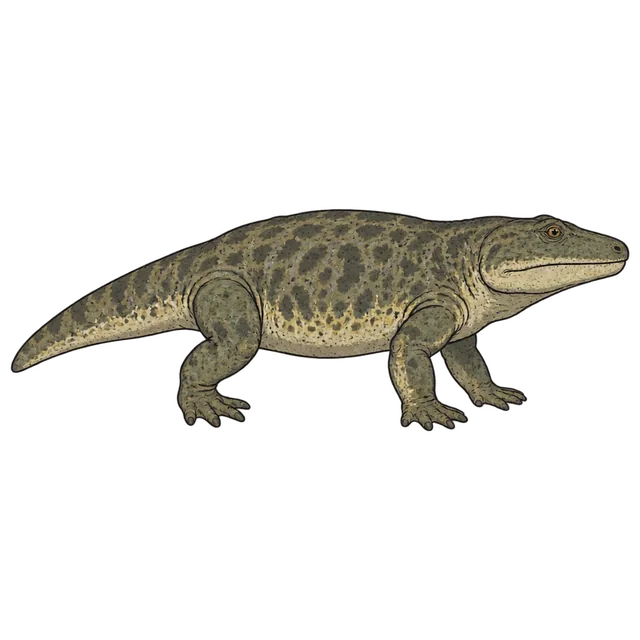
As Eryops you would be a squat, broad-headed amphibian about the size of a small alligator, lounging at the water’s edge and lunging at anything fishy that swam by.
A heavyweight amphibian
Eryops was a temnospondyl, a member of a large group of early tetrapods distantly related to modern amphibians. Adults reached around 1.5–2 m in length, with a stout body, short sturdy legs and a broad, flat skull. Your skeleton was unusually robust for an amphibian, which suggests you could move about on land as well as in water.
Your mouth was lined with many sharp teeth, including large fangs on the palate. The structure of your skull suggests you could not chew; instead you would grab prey and toss it back with jerks of your head, as crocodiles do.
Meals and habits
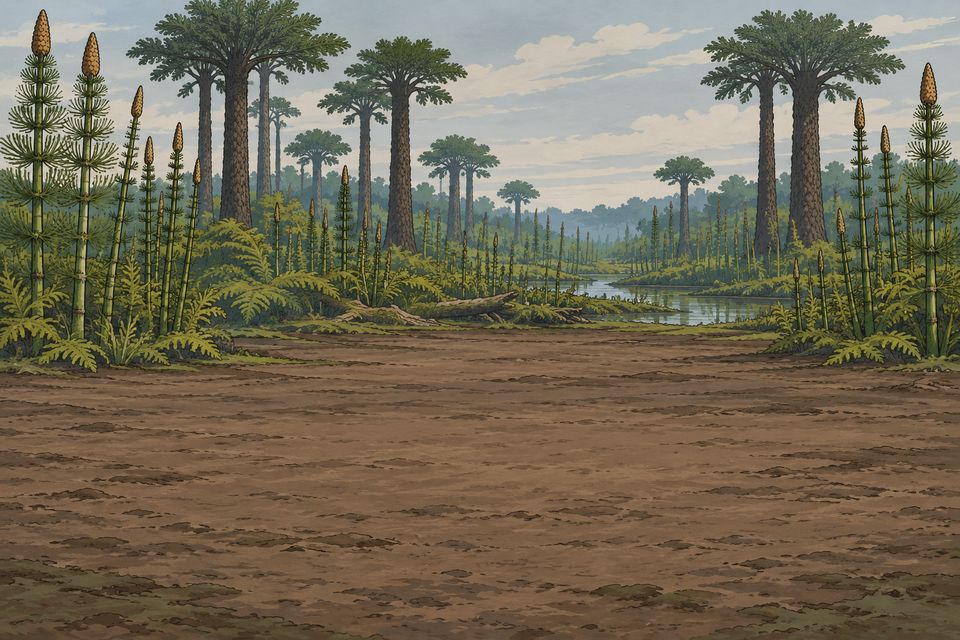
Most researchers see Eryops as a semi-aquatic predator feeding mainly on fish, though it probably took other amphibians and small animals when it could. You would likely spend time basking or waiting in the shallows of swamps, ponds and slow streams. Young Eryops probably started life in water as larvae, as many amphibians do today, before growing into the heavy adult form.
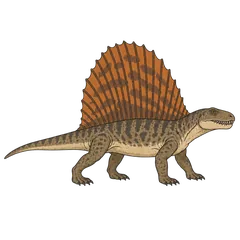
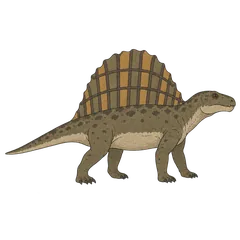
Moving on land would be slow and heavy work, so you would probably not stray far from water. Large adults had few enemies, but juveniles faced predatory fish, other amphibians and early synapsids such as Dimetrodon in the Permian.
Fossil record
Eryops lived about 300–290 million years ago, at the boundary of the Carboniferous and Permian periods. It is one of the best-known early tetrapods thanks to many skeletons from the red beds of Texas and New Mexico, first described by Edward Drinker Cope in 1887. The name roughly means “drawn-out face”, referring to the long snout.