Scutosaurus
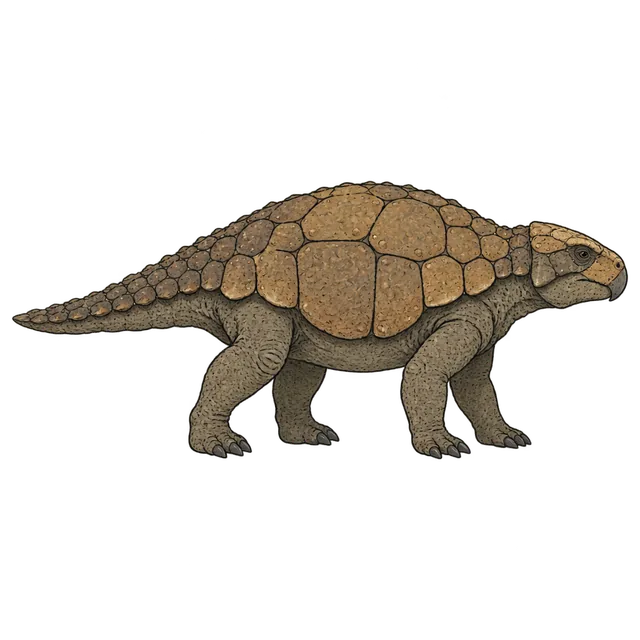
As Scutosaurus you would be a slow, barrel-bodied plant-eater the size of a small car, wearing bony studs all over your back and a face covered in knobs.
Armour by the plate
Scutosaurus was a pareiasaur, part of a group of large, early reptiles. Adults reached about 2.5–3 m in length and were very heavily built, with short, sturdy legs held partly beneath the body. Your skin was set with bony plates called osteoderms, and your broad skull carried knobby bosses and spikes on the cheeks – the name means “shield lizard”.
Your head was wide and flat, and your eyes looked out through bony ridges. Pareiasaurs have no close living relatives; their exact position among reptiles is still debated, though some studies link them to the ancestors of turtles. Your bony armour was more about protection than speed. You would be slow, and your best chance of surviving an attack was being too big and too tough to bring down.
Grazing through the drought
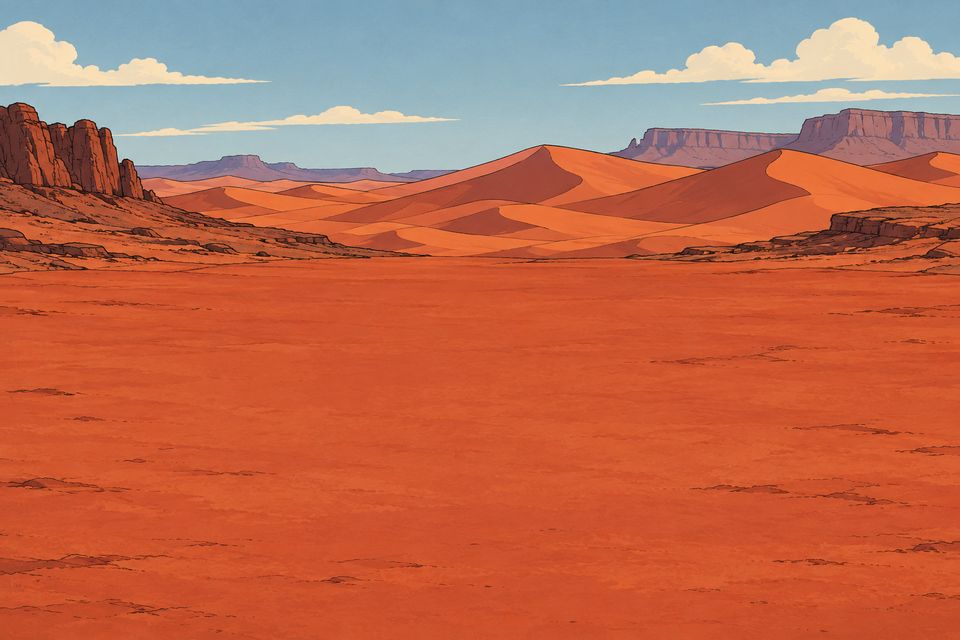
You were a herbivore, with leaf-shaped, serrated teeth suited to shredding tough plants. Late Permian Russia was a seasonal, semi-arid landscape of rivers and floodplains, so you probably stayed near water where vegetation grew best.
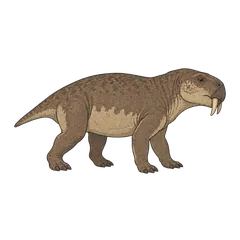
Fossils of Scutosaurus have sometimes been found in groups, which may hint at herd life or simply at many animals gathering around shrinking waterholes in the dry season. Your greatest threat would be the gorgonopsian Inostrancevia, a sabre-toothed predator that shared your habitat. Water was the key resource.
Excavated in the north
The best Scutosaurus skeletons come from the Northern Dvina River region of Russia, excavated around 1900 by Vladimir Amalitsky. They lived roughly 265–252 million years ago and, like most large animals of the time, disappeared in the end-Permian mass extinction.