Hylonomus
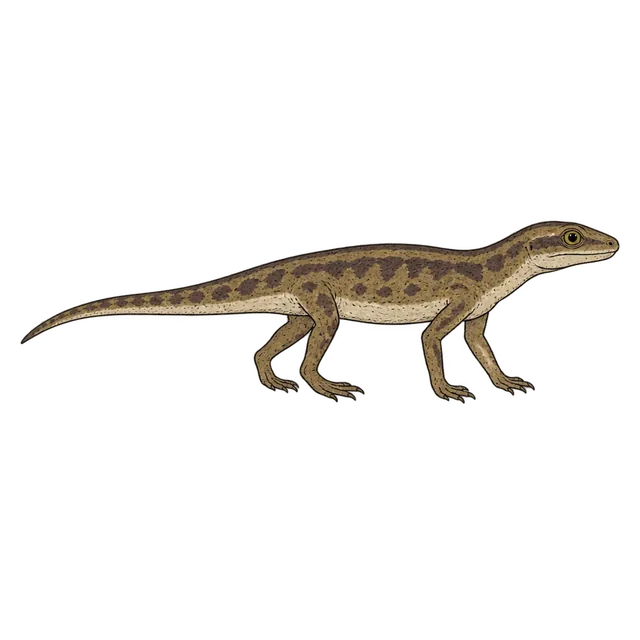
Reborn as Hylonomus, you would be a small, lizard-like animal scurrying through a Carboniferous forest – and one of the first creatures ever to lay eggs that could survive on dry land.
Among the first reptiles
Hylonomus lyelli is one of the oldest known reptiles, living about 312 million years ago. You would be about 20 cm long including the tail, with a slender body, four sprawling legs and small, sharp teeth. To a modern eye you would look rather like a lizard, though you were not closely related to today’s lizards.
Being an early reptile meant something important: your lineage, the amniotes, produced eggs with protective membranes that did not need to be laid in water. That freed animals like you from the ponds that amphibians still depended on. Your skull was small and light, and your jaw muscles were arranged in a way that allowed a quick, snapping bite, ideal for catching fast insects.
Life in the stumps
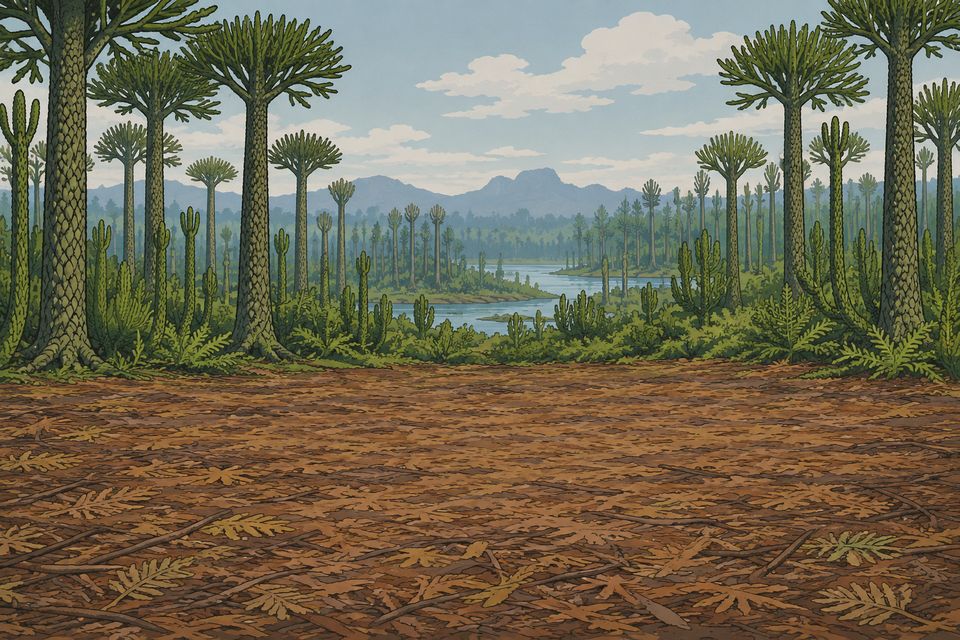
The famous fossils come from Joggins, Nova Scotia, where skeletons were found inside the hollow, upright stumps of giant club-moss trees. One explanation is that small animals fell or crawled into the rotting stumps, perhaps hunting or sheltering, and could not climb out before being buried by sediment.
Your diet would be insects, millipedes and other small invertebrates, abundant in the coal forests. Larger amphibians and early predators were your main threats. Some skeletons are nearly complete.
Discovery
Hylonomus was found by the Canadian geologist John William Dawson, who described it in 1860 after visiting Joggins with Charles Lyell, the influential British geologist honoured in its species name. The name Hylonomus means “forest dweller”. The Joggins Fossil Cliffs are now a UNESCO World Heritage Site, and Hylonomus was named Nova Scotia’s provincial fossil in 2002.