Inostrancevia
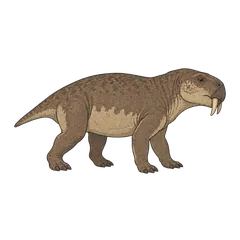
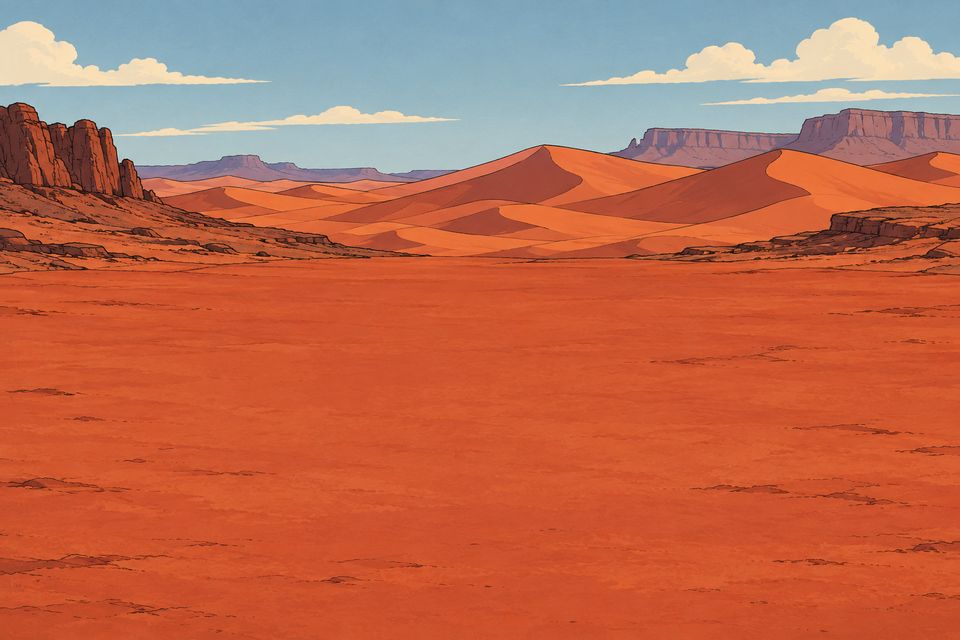
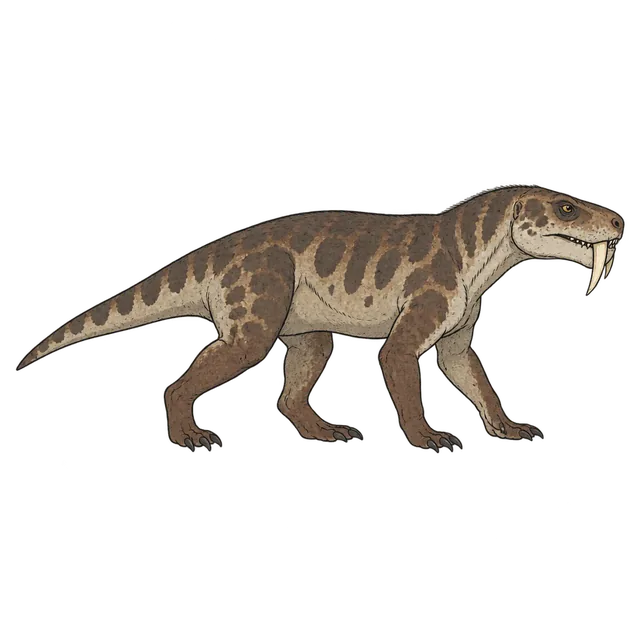
If you come back as Inostrancevia, you will be a saber-toothed predator the size of a large bear, ruling the late Permian floodplains of what is now Russia.
Sabres before cats
Inostrancevia was a gorgonopsian, a member of a group of predatory synapsids – early relatives of mammals. It was one of the largest gorgonopsians, about 3–3.5 m long, with a long skull of around 50–60 cm. Your most striking feature would be the long, blade-like upper canines, more than 10 cm long, that worked like sabres. Your jaws could open extremely wide to bring those fangs into play. Your skull was massive.
Hunting big herbivores
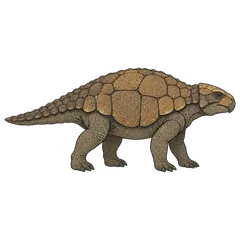
Your likely prey included large plant-eaters such as the armoured pareiasaur Scutosaurus, which lived in the same region. A plausible hunting method, inferred from skull and tooth structure, would be to deliver deep slashing bites and wait for prey to weaken, rather than holding on with a crushing grip. You walked with a more upright gait than earlier synapsids such as Dimetrodon.
Gorgonopsians had large eye sockets and well-developed senses of smell, so you may have hunted at dawn, dusk or even at night. Your teeth were replaced throughout life, so a broken sabre was not a career-ending injury.
Russia and South Africa
Inostrancevia was first found along the Northern Dvina River in northern Russia and described by Vladimir Amalitsky, named after the geologist Alexander Inostrantsev. In 2023 researchers reported Inostrancevia fossils from South Africa’s Karoo Basin, suggesting that the animal moved into the region shortly before the great end-Permian extinction, filling a gap left by local predators that had already died out.
You would not have long to enjoy it: the end-Permian mass extinction, around 252 million years ago, wiped out gorgonopsians entirely.