Postosuchus
In the Late Triassic, before dinosaurs ruled anything, the biggest predator on the riverbanks of western Pangaea was you – a Postosuchus, on the crocodile side of the reptile family.
The Triassic’s top predator
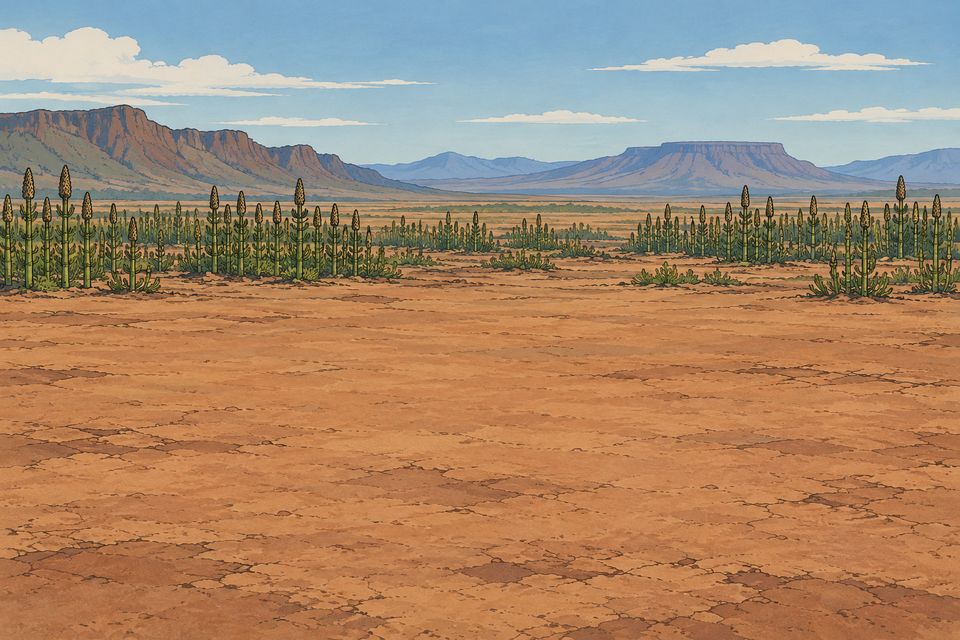
Postosuchus lived about 220 to 205 million years ago, in the Late Triassic, on the floodplains of western Pangaea, in what is now Texas, New Mexico and Arizona; a second species, P. alisonae, comes from North Carolina, which then lay on the eastern edge of the same supercontinent. It was named in 1985 by Sankar Chatterjee after the town of Post, Texas, near which the first fossils were found. It belonged to the pseudosuchians – the crocodile-line archosaurs – so its closest living relatives are crocodiles, not birds. In many Triassic ecosystems, pseudosuchians, not dinosaurs, were the dominant large animals.
On two legs or four?
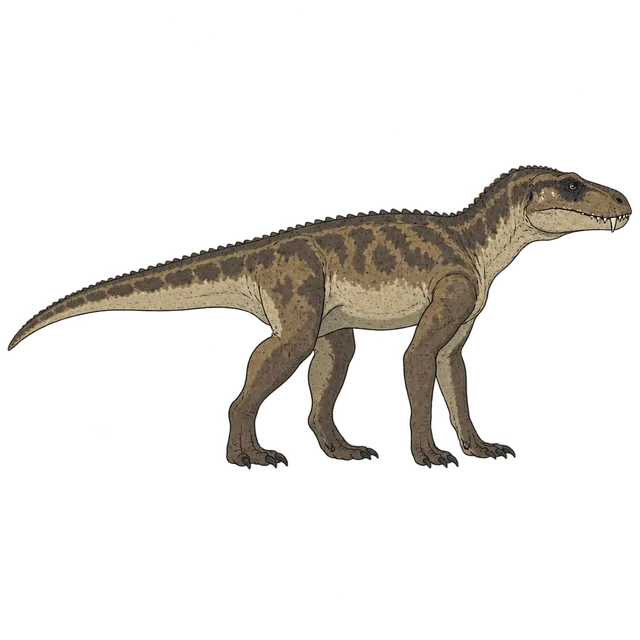
Postosuchus reached about 4–5 metres in length, with a deep skull, serrated blade-like teeth and an armour of bony plates along the back. Its forelimbs were noticeably shorter than its hind limbs, and researchers have long debated whether it walked on two legs, four, or switched between them. The question is still open; some studies argue it could at least stand or walk upright on its hind legs for part of the time. Its original fossil collection turned out to mix bones from several different animals, a common problem in old quarries.
Who was on the menu
Prey would include dicynodonts such as the large, beaked Placerias, the armoured, plant-eating aetosaurs, and early dinosaurs, which were still small and relatively rare in its world. The P. alisonae specimen was found with the remains of several other animals in its gut region, including a small dicynodont. In this life you would be the hunter, not the hunted – at least once you had outgrown the juvenile stage, when larger predators, including other Postosuchus, would have been a real threat.
Its era ended badly: in the end-Triassic mass extinction about 201 million years ago, most large pseudosuchians disappeared, leaving the stage to the dinosaurs.