Hesperornis
Reborn as a Hesperornis, you would be a bird with teeth and almost no wings – a superb swimmer and a hopeless walker.
A bird with teeth
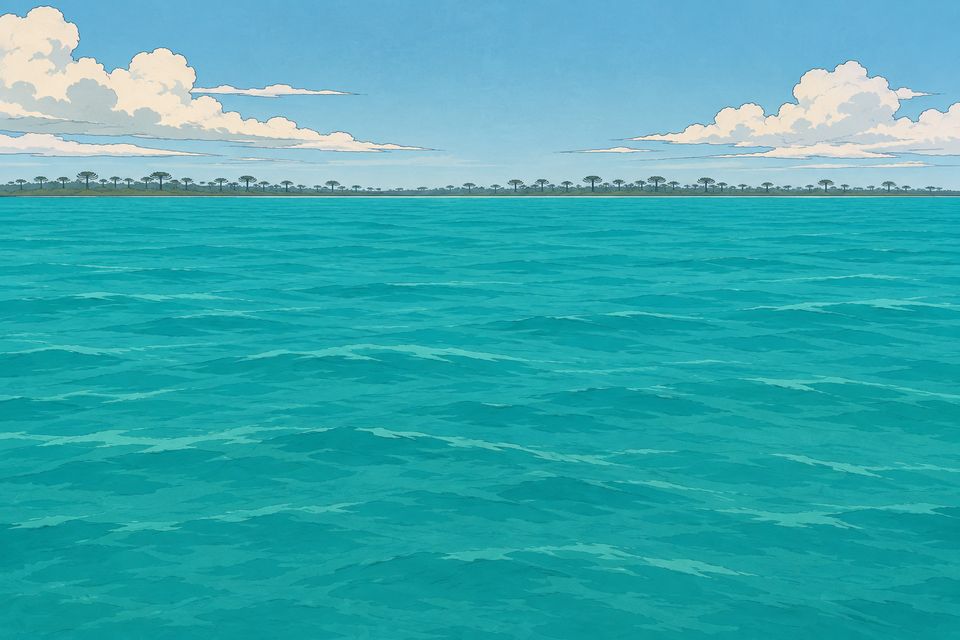
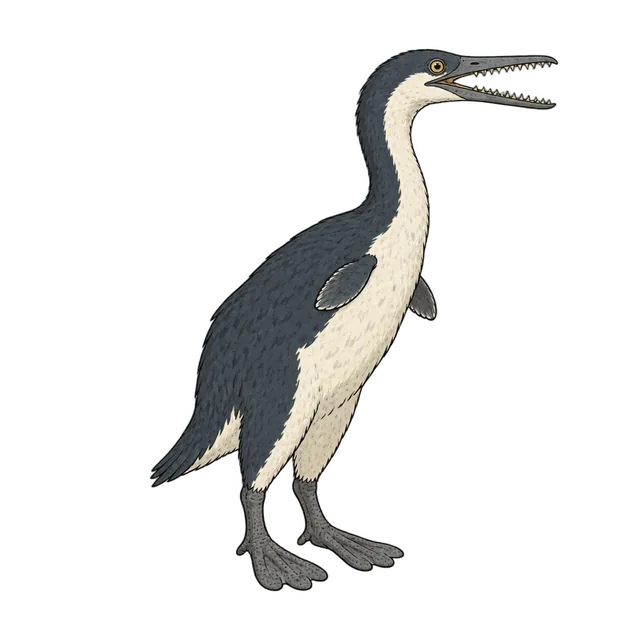
Hesperornis lived roughly 85 to 75 million years ago in the Western Interior Seaway, the shallow sea dividing North America, with fossils from Kansas to Canada and the Arctic. It was a bird, so technically a dinosaur – the only animal on this list of marine creatures that can claim that. Its jaws carried small, sharp teeth set in a groove, and it was a member of an early side branch of the bird family tree, not an ancestor of modern birds.
Large species reached about 1.5–1.8 metres long. The wings were reduced to little more than a slender upper arm bone; flight was out of the question.
Life underwater
Everything was in the legs. Powerful hind limbs set far back on the body, with feet that were probably lobed like a grebe’s, drove it through the water like a modern loon. You would chase fish and small squid-like animals underwater, gripping them with the toothed bill. On land, that leg position would make you clumsy at best, probably pushing yourself along on your belly. You would still need to come ashore to lay eggs, possibly in the far north, where young Hesperornis remains have been found. The main dangers came from the sea itself: mosasaurs, large predatory fish and sharks.
A gift to Darwin
Othniel Charles Marsh named Hesperornis (‘western bird’) in 1872, and in 1880 published a monograph on the toothed birds of Kansas. Together with Archaeopteryx, they were powerful evidence that birds had reptilian ancestors. Charles Darwin wrote to Marsh that these finds offered the best support for his theory of evolution in the twenty years since On the Origin of Species.