Xiphactinus
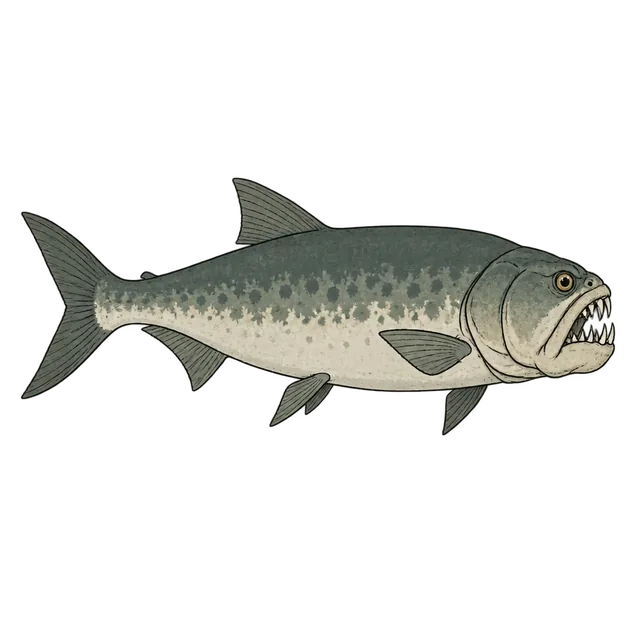
As a Xiphactinus you would be a five-metre fish with an underbite full of fangs and a bad habit of swallowing prey that was far too big for you.
A bulldog of the inland sea
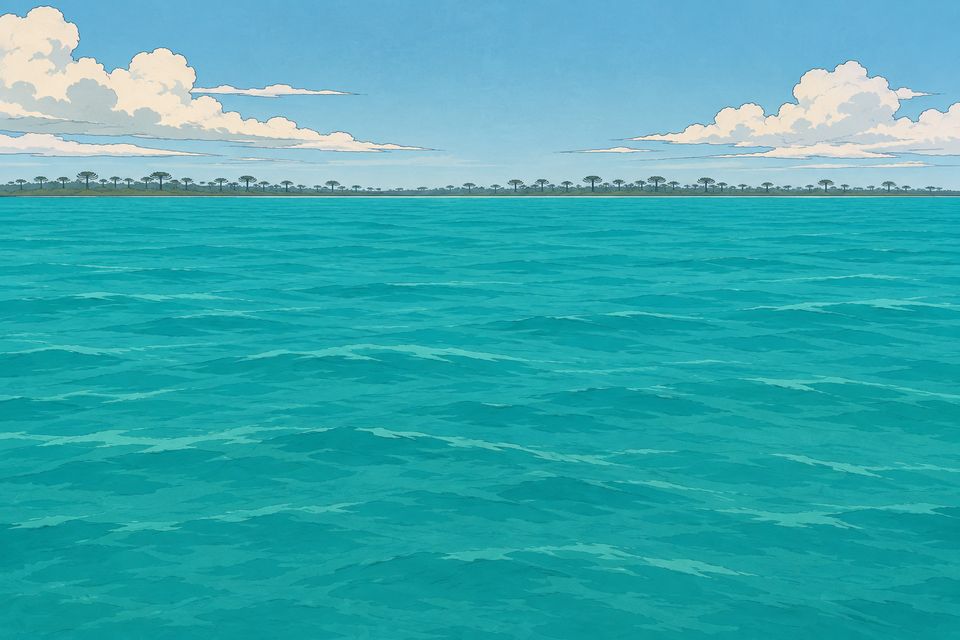
Xiphactinus audax lived about 90 to 66 million years ago in the Late Cretaceous, mostly in North America’s Western Interior Seaway, with remains also known from Europe and Australia. It was an ichthyodectiform, an extinct group of bony fishes with no close living relatives – the bulldog-like profile and upturned lower jaw have earned it the nickname ‘bulldog fish’. Large individuals reached around 5–6 metres. The name means ‘sword ray’, after the strong, blade-like front rays of its pectoral fins. Its fossils are especially common in the Niobrara chalk of Kansas, where complete skeletons several metres long are displayed in museums.
The fish-within-a-fish
The most famous specimen, at the Sternberg Museum of Natural History in Hays, Kansas, is a 4-metre Xiphactinus with an almost complete 1.8-metre Gillicus – another ichthyodectiform – inside its body. It was collected by George F. Sternberg in 1952. The prey appears to have been swallowed whole, headfirst, and the predator seems to have died soon afterwards, perhaps because the struggling meal damaged its organs. Several other Xiphactinus have been found with large fish inside. For an animal that swallowed whole, the size of the throat set the limit – and Xiphactinus seems to have tested that limit often.
Hunter and hunted
As a fast, open-water predator you would chase fish, and perhaps the occasional seabird, using a mouth lined with long, fang-like teeth to grab them before swallowing. Your power came from a deep body and a large forked tail, built for bursts of speed. That still did not put you at the top: Xiphactinus remains have been found in the stomachs of large sharks such as Cretoxyrhina, and mosasaurs and plesiosaurs were around too. Its lineage disappeared with the end-Cretaceous extinction. Like most bony fish, it probably spawned huge numbers of tiny eggs, so this life would most likely begin as a larva in the plankton – with only a few siblings ever reaching adulthood.