Vegavis
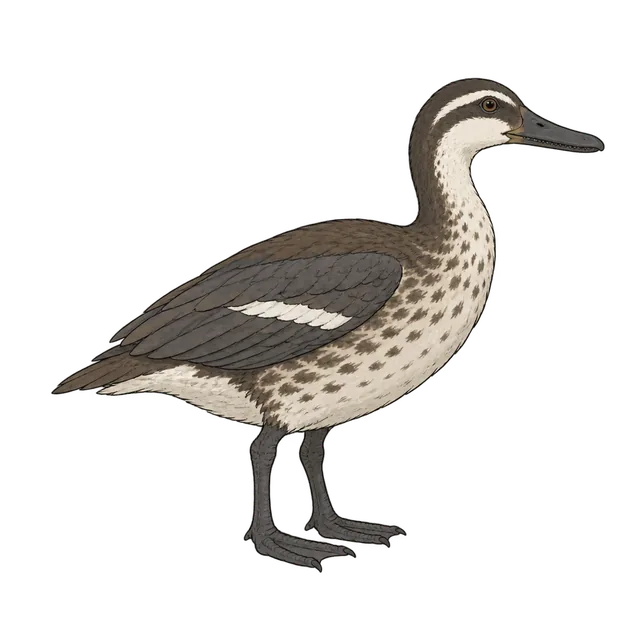
As a Vegavis you would paddle along the coasts of a forested, ice-free Antarctica – a modern-type bird at a time when non-avian dinosaurs still walked nearby.
Antarctica without ice
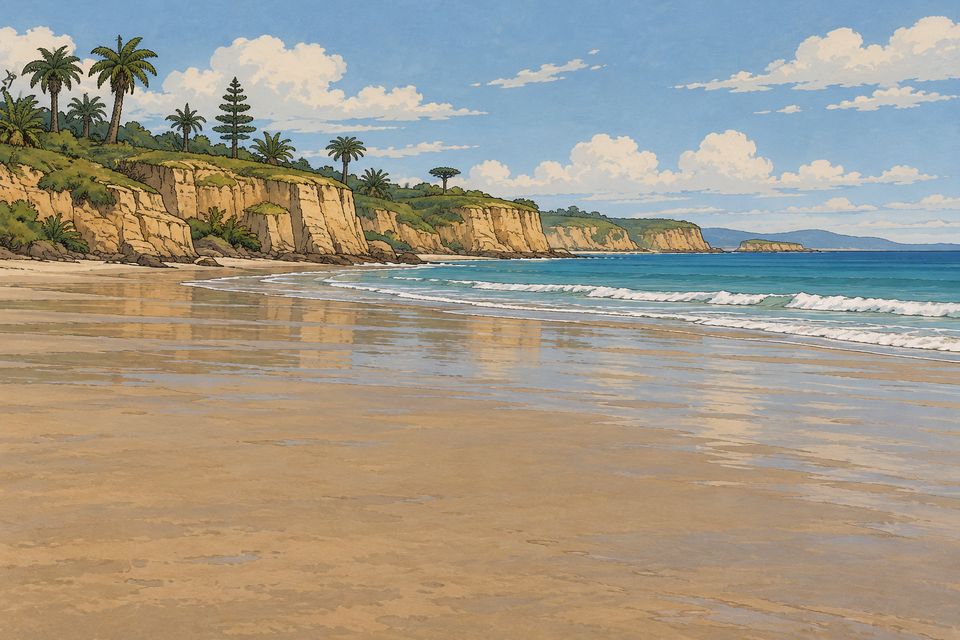
Vegavis iaai lived about 69 to 66 million years ago, at the very end of the Cretaceous. Its fossils come from Vega Island, off the Antarctic Peninsula, which gave the genus its name. At the time, Antarctica sat near the South Pole much as it does today, but the climate was far milder: there were forests of conifers and southern beeches, and no permanent ice sheet. Winters, though, would still bring months of darkness.
The bird was formally described in 2005 from a partial skeleton found in 1992. A beautifully preserved skull, described in 2025, added important detail.
An early modern bird
Vegavis matters because it belongs to Neornithes, the group that includes every bird alive today. It has usually been placed among the waterfowl relatives (Anseriformes) – the lineage of ducks, geese and swans – although the newer skull has led some researchers to argue it was a diving bird with a pointed, loon-like bill, and its exact branch is still discussed. Either way, it shows that modern bird lineages had already started to split before the asteroid struck. Its leg bones suggest a foot-propelled diver: you would feed by swimming underwater after fish and small invertebrates.
The oldest voice box
In 2016, researchers described a fossil syrinx – the vocal organ of birds – preserved with a Vegavis specimen. It is the oldest known syrinx, and its asymmetrical structure resembles that of ducks and geese, suggesting Vegavis could honk rather than sing. Its world ended dramatically, but birds of its kind were among the survivors: modern birds made it through the mass extinction that wiped out all other dinosaurs.