Confuciusornis
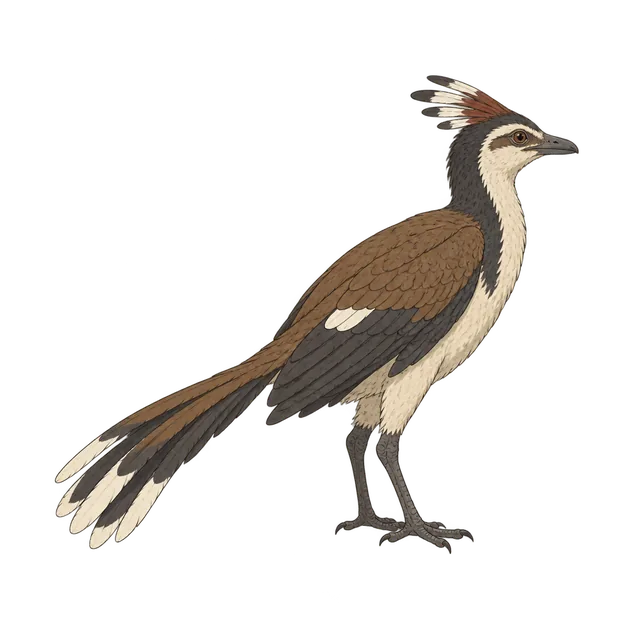
As a Confuciusornis you would be one of the first birds to swap teeth for a beak – and, if you were a male, you might trail two ribbon-like tail feathers longer than your whole body.
Forests by the volcanoes
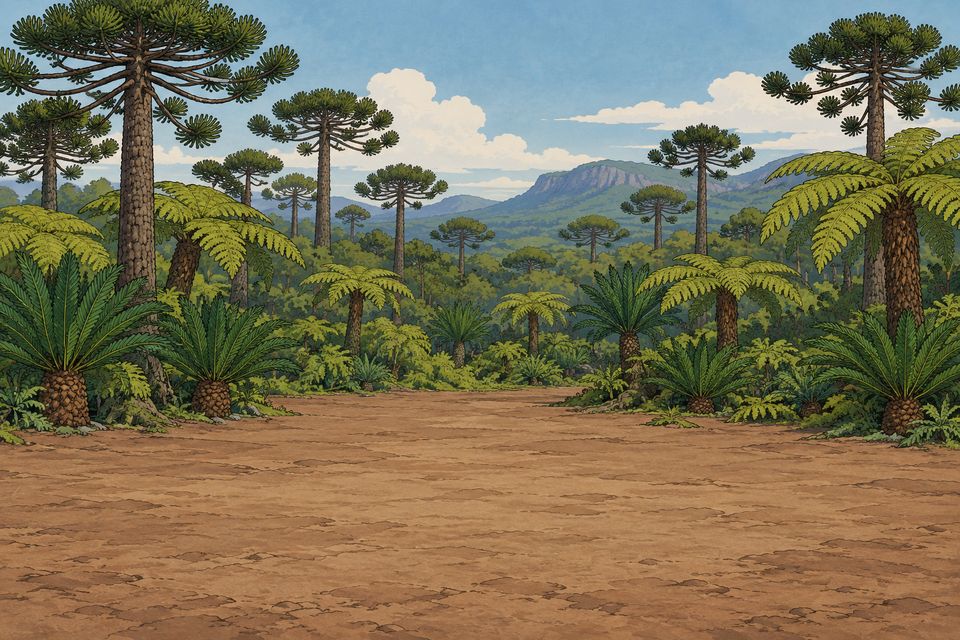
About 125 to 120 million years ago, north-eastern China (today’s Liaoning province) was a landscape of temperate forests and lakes, shadowed by active volcanoes. The fine lake sediments of the Yixian and Jiufotang Formations – part of what is called the Jehol Biota – preserve not just bones but feathers, skin outlines and even stomach contents. Confuciusornis, named in 1995 after the philosopher Confucius, is the most common bird in these beds: thousands of specimens are known.
It was a bird, and birds are living dinosaurs, so in this life you would technically be a small feathered dinosaur – though one more advanced than Archaeopteryx and far less modern than any living bird.
Beak, claws and streamers
Confuciusornis was about the size of a crow. It had the earliest known toothless, horn-covered beak among birds, but kept three big clawed fingers on each wing, a primitive feature. Many specimens have a pair of very long, narrow tail feathers; others lack them, and the usual interpretation is that these were display feathers, perhaps of males. Pigment-bearing structures called melanosomes, preserved in some feathers, suggest a mottled plumage of browns, greys and black.
Whether it was a strong flier is still debated: the wings look capable, but the shoulder joint and breastbone suggest it may have been better at short flights or gliding between trees than at long journeys.
A life measured by ash
Its diet is uncertain. One specimen preserves fish remains in its gut, but the beak and claws would also suit seeds, insects and small prey. Bone-tissue studies suggest it grew fairly fast, but not with the weeks-long growth spurt of most modern birds, and females may have started breeding before they were fully grown. Many individuals died in large groups, probably killed by volcanic gas or ash and then washed into the lakes – a clue that this species may have lived in flocks.