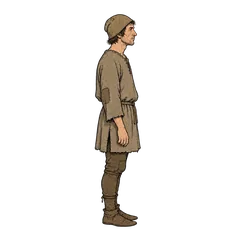
Medieval minstrel
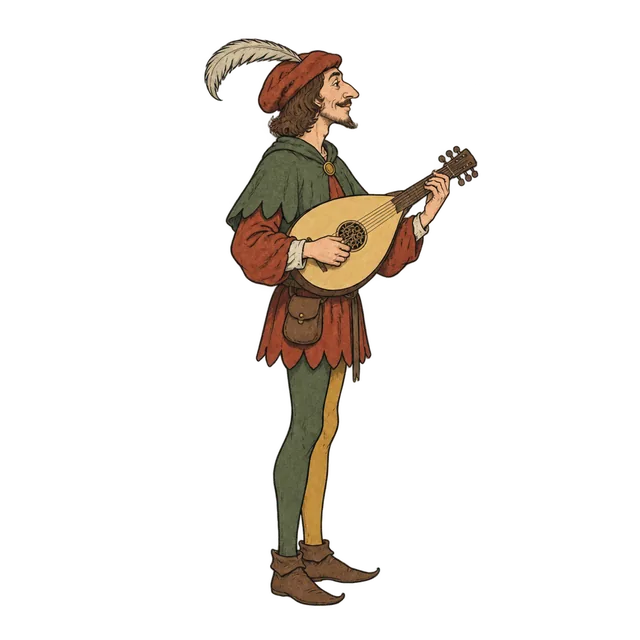
As a minstrel you would trade on your voice, your fingers and your memory – earning your supper in a lord’s hall one night and in a tavern the next.

Many kinds of performer
‘Minstrel’ covered a wide range of entertainers. Some were permanent household musicians employed by kings, nobles and towns, paid wages and given livery. Others travelled from fair to fair, wedding to feast. The jongleur was a performer who might sing, play, juggle, tumble and recite, while the troubadours of southern France, active from the late 11th to the 13th century, were poet-composers – some of them nobles – who wrote songs of courtly love that jongleurs often performed.
Instruments and repertoire
Minstrels played the vielle or fiddle, harp, lute, citole, psaltery, bagpipes, shawm, pipe and tabor and hurdy-gurdy. They performed epic tales of heroes such as Roland, love songs, dance music, satire and news set to verse. Most music was memorised and passed on orally, so only a small part of what minstrels played was ever written down.
Polish courts employed musicians too, and the oldest surviving Polish religious song, the Bogurodzica, was sung by knights before battle, including at Grunwald in 1410, according to Jan Długosz.
Life on the road
The life was precarious. Income depended on patrons’ generosity – gifts of coins, clothes or a horse – and the Church often viewed wandering entertainers with suspicion, as morally dangerous. In some towns minstrels organised into guilds to protect their work and status; in Paris a minstrels’ confraternity was established in 1321. Old age without a patron could mean poverty, so the lucky ones secured a permanent place in a great household. On the road, minstrels faced the same dangers as other travellers – bad weather, bandits and disease – and some places treated wandering performers as vagrants.