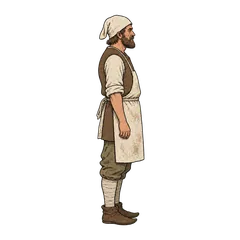
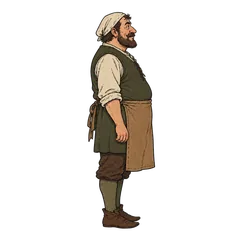
Medieval blacksmith
As a village blacksmith you would be indispensable: every plough, horseshoe, nail and knife in the parish passed through your hands sooner or later.
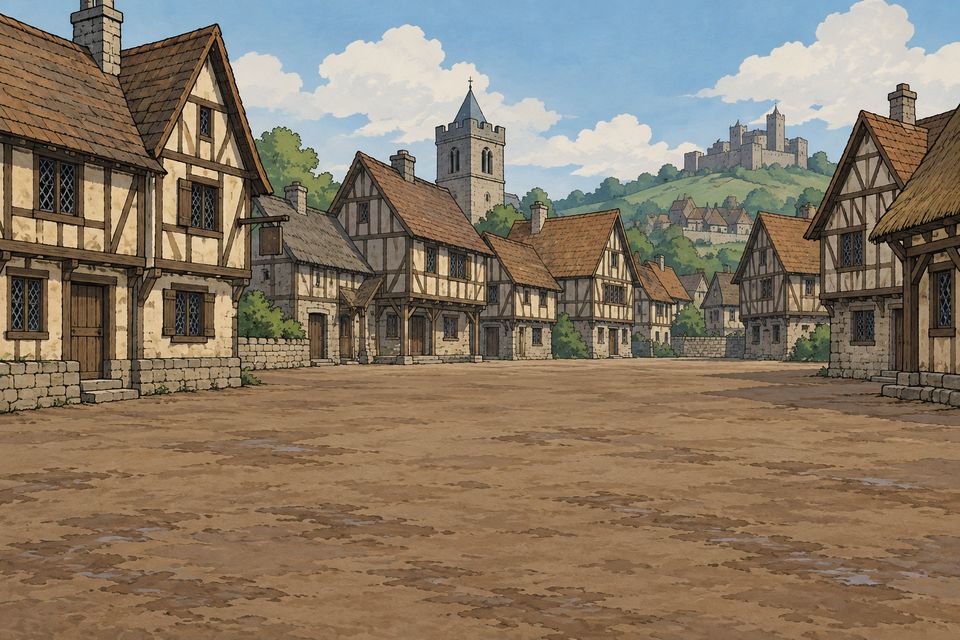
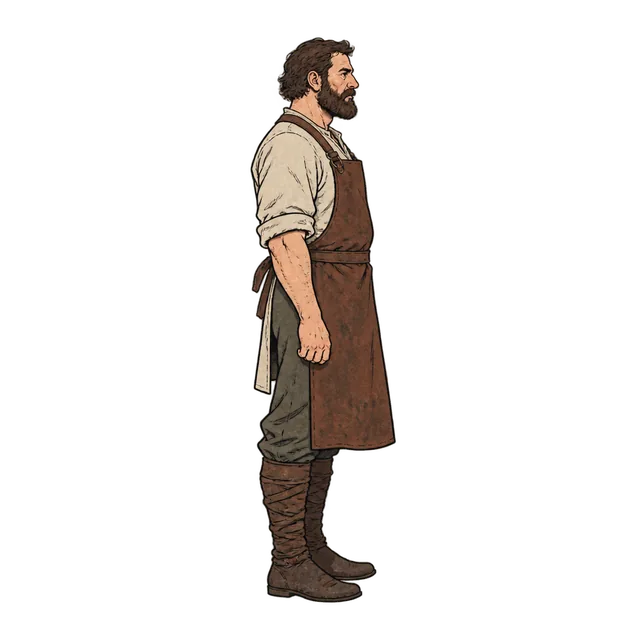
Iron before the blast furnace
For most of the Middle Ages, iron was made in bloomeries: small clay furnaces where ore was heated with charcoal until it formed a spongy lump of iron and slag, the bloom. This was hammered repeatedly to squeeze out the slag. Blast furnaces producing liquid cast iron appeared in Europe only in the late Middle Ages, from around the 13th–15th centuries, so for a long time iron was laborious and fairly expensive.
The smith worked that iron at a forge fed by charcoal and blown hot by bellows, often worked by an apprentice. Without thermometers, temperature was judged by colour – cherry red, orange, yellow, white – and a good smith could forge-weld two pieces together by hammering them at just the right heat.
What the village ordered
Weapons get the glory, but a rural smith’s bread and butter was humbler: horseshoes and nails, ploughshares and coulters, sickles, scythes, axes, hinges, locks, pot-hooks and the iron tyres of cart wheels. Repairs were constant. The spread of the heavy plough and of horseshoes in the High Middle Ages made smiths ever more central to farming.
In towns, the trade split into specialists – armourers, locksmiths, nailers, cutlers, bladesmiths – often organised in guilds that controlled training, prices and quality. A boy would serve several years as an apprentice, then as a journeyman, before he could become a master.
Heat, noise and respect
The work was hot, loud and hard on the body: burns, eye injuries from flying scale and slowly failing hearing were common. The forge was also a social hub where men waited, gossiped and swapped news. In folklore smiths were often credited with special, even magical power over fire and metal – and the many surnames Smith, Schmidt, Kowalski and Kovács show how widespread the trade was.