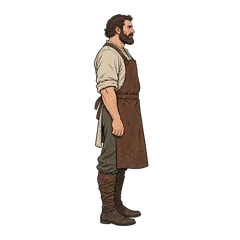
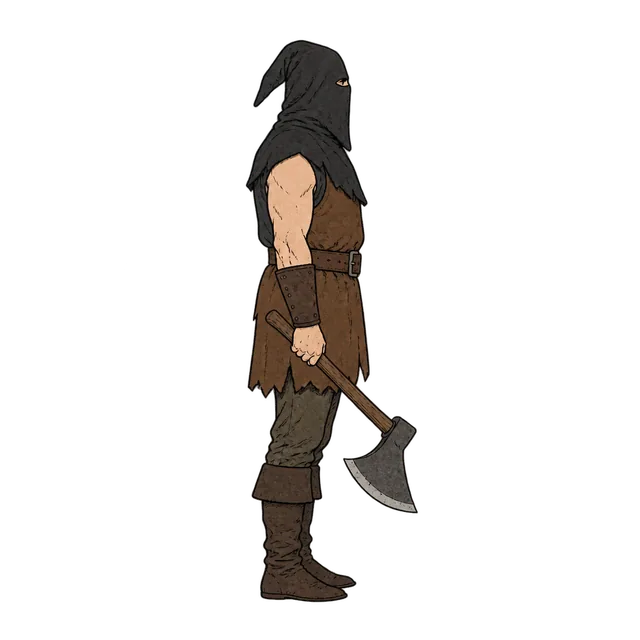
Medieval executioner
As the town executioner you would hold a steady, well-paid job – and almost nobody would want to sit next to you in church.
A municipal employee
Executioners were usually employed by a town or a lord and paid a salary plus fees for each task: a hanging, a beheading, a flogging, branding or time in the pillory. Executions were public, ritualised events meant to deter, and the executioner had to perform them competently – a botched beheading could provoke the crowd to turn on him. In many places he also carried out judicial torture during interrogations, which was legal in much of continental Europe at the time.
The method depended on status and crime. Beheading by sword was often reserved for nobles and was considered the more honourable death; thieves were typically hanged, while the cruellest punishments were kept for crimes such as treason or heresy.
Living as an outsider
In German-speaking lands and in Poland the profession was regarded as ‘dishonourable’. Executioners often lived on the edge of town, could be refused service in taverns and had reserved places at church. Their children struggled to marry outside the trade, so executioner families intermarried and formed dynasties lasting generations. To make ends meet, the executioner might also remove dead animals, clean latrines or oversee the town brothel.
The healer with the sword
A surprising sideline: because they knew human anatomy intimately, many executioners worked as healers, setting bones and treating wounds – sometimes more successfully than university physicians. The best-known record is the diary of Frantz Schmidt, executioner of Nuremberg from 1578 to 1617, who listed his executions in detail and later in life saw himself mainly as a medical practitioner. He eventually won restoration of his family’s honour.