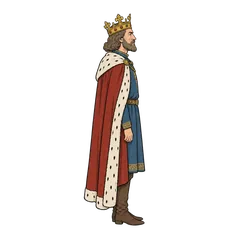
Medieval knight
Reborn as a knight, you would spend more time managing land, debts and horses than charging at dragons – but when war came, you were expected to ride at the front.
An expensive profession
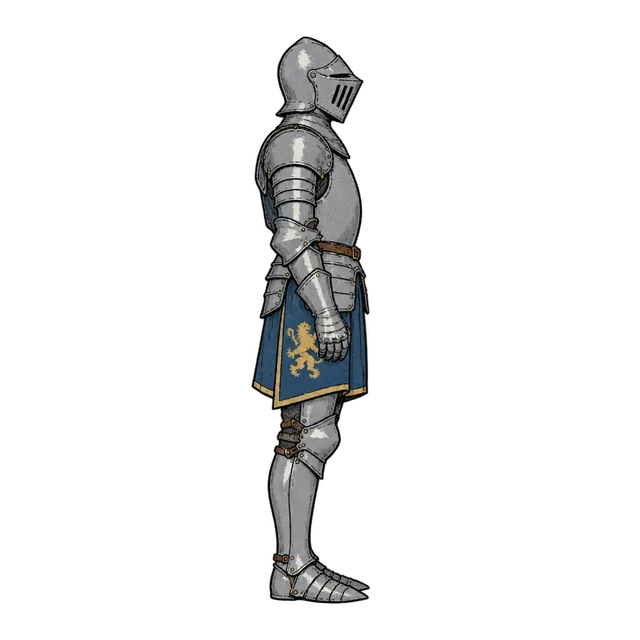
Knighthood was above all a way of fighting on horseback, and it was costly. A trained warhorse could be worth as much as a small farm, and a knight usually needed several mounts, plus weapons, mail or plate armour and servants. That is why knights were normally supported by land: a manor or a group of villages whose rents paid for the gear. In return they owed military service to their lord or king, often a set number of days per year.
Training started in boyhood, first as a page, then as a squire. By the time a young man was dubbed, he had spent years learning to ride, handle a lance and sword, and wear armour for hours. A full suit of 15th-century plate typically weighed around 15–25 kg, spread over the whole body – heavy, but a fit knight could run, mount a horse and get up from the ground in it.
Tournaments, war and chivalry
In peacetime, tournaments were practice, sport and networking at once. Early melees were rough mock battles over open country; later jousts were more staged. Real war, though, was less about duels than sieges, raids and long marches. Knights were often captured rather than killed, because a noble prisoner could be ransomed for a fortune.
Chivalry – loyalty, courage, generosity, protection of the Church and the weak – was a genuine ideal promoted in literature and sermons, but it applied mostly among fellow nobles. Peasants caught in a raid rarely experienced the gentle side of it.
Polish knights
In Poland the knightly class gradually merged into the szlachta, the nobility, who shared coats of arms within whole clans. The most famous medieval Polish knight, Zawisza Czarny of Garbów, fought at Grunwald in 1410 and became a byword for reliability: ‘to rely on someone like on Zawisza’ is still a Polish saying.