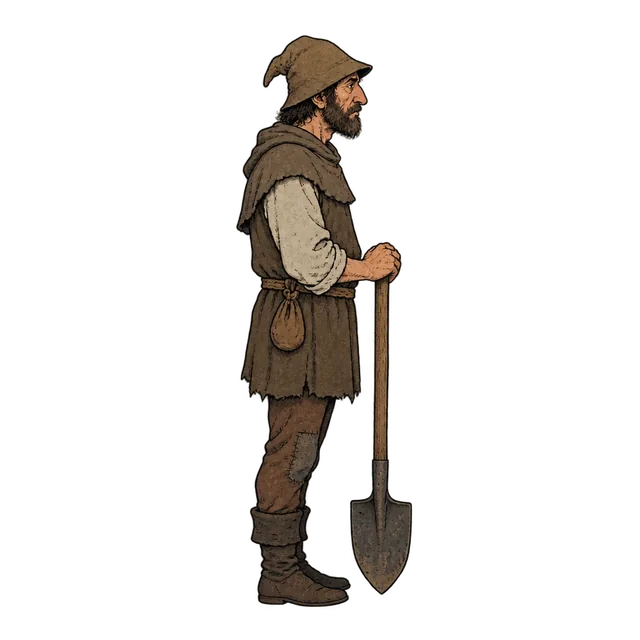
Medieval gravedigger
As a gravedigger you would know every corner of the churchyard – and which old bones you were likely to hit when you dug a new grave.
The churchyard as workplace
In medieval Christian Europe the dead were normally buried in consecrated ground around the parish church, close to the living community. Most ordinary people were buried in a simple linen shroud rather than a coffin; coffins were more common for the wealthy, and the most privileged were buried inside the church itself. The gravedigger, often also a sexton or church servant, dug graves by hand with a spade and pick, filled them in after the funeral and helped maintain the churchyard.
Crowded ground
Churchyards were used for centuries, so they filled up. Diggers regularly disturbed earlier burials, and the bones were collected and stored in charnel houses or ossuaries. Some survive, such as the ossuary at Sedlec in Bohemia; Poland has the Chapel of Skulls at Czermna, though it dates from the 18th century. Burials were usually oriented east–west, with the head to the west so the dead would face east at the Resurrection. Suicides, the unbaptised and excommunicates were often refused burial in consecrated ground. Ordinary graves were rarely marked permanently; a wooden cross soon rotted, so the location lived mostly in the memory of the family – and the gravedigger.
When death came in waves
During the Black Death of 1347–1353, normal burial customs collapsed in many towns. Churchyards overflowed and authorities opened mass graves – plague pits – where bodies were laid in rows. Excavations at the East Smithfield cemetery in London, opened in 1348–1349, uncovered hundreds of orderly burials, showing care even in crisis. Gravediggers faced real danger and, in plague years, could demand higher pay. Today archaeologists study such cemeteries to learn about diet, disease, injuries and lifespans of people the written records ignore.