Meganeura
As Meganeura you would be a dragonfly-like hunter with wings as wide as a seagull’s, cruising over steaming swamp forests some 300 million years ago.
Not quite a dragonfly
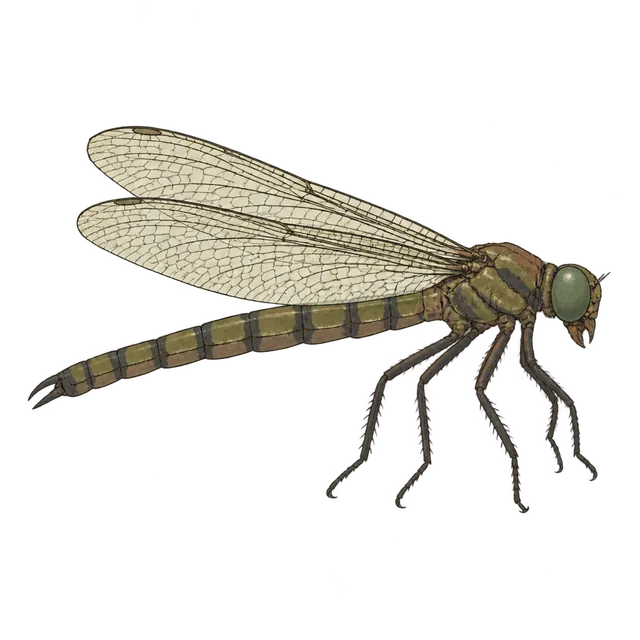
Meganeura belonged to the griffinflies (order Meganisoptera), early relatives of modern dragonflies and damselflies. The best-known species, Meganeura monyi, had a wingspan of roughly 65–70 cm, making it one of the largest insects ever to fly. Your body was long and slender, with large eyes, strong spiny legs for grabbing prey in mid-air, and four stiff wings that could not fold back over the body.
Like modern dragonflies, you were almost certainly a predator, snatching other flying insects and perhaps small vertebrates. With huge compound eyes covering much of your head, you would have excellent vision for spotting prey against the sky.
Why so big?
The Late Carboniferous atmosphere was unusually rich in oxygen, with estimates often above 30% compared with 21% today. Insects breathe through tubes called tracheae, which limit how large they can grow, and higher oxygen levels may have allowed bigger bodies. This idea is widely discussed but not the whole story: the absence of flying vertebrate predators at the time may also have played a part, and giant griffinflies persisted into the Permian, when oxygen levels had fallen.
Life cycle in the swamp
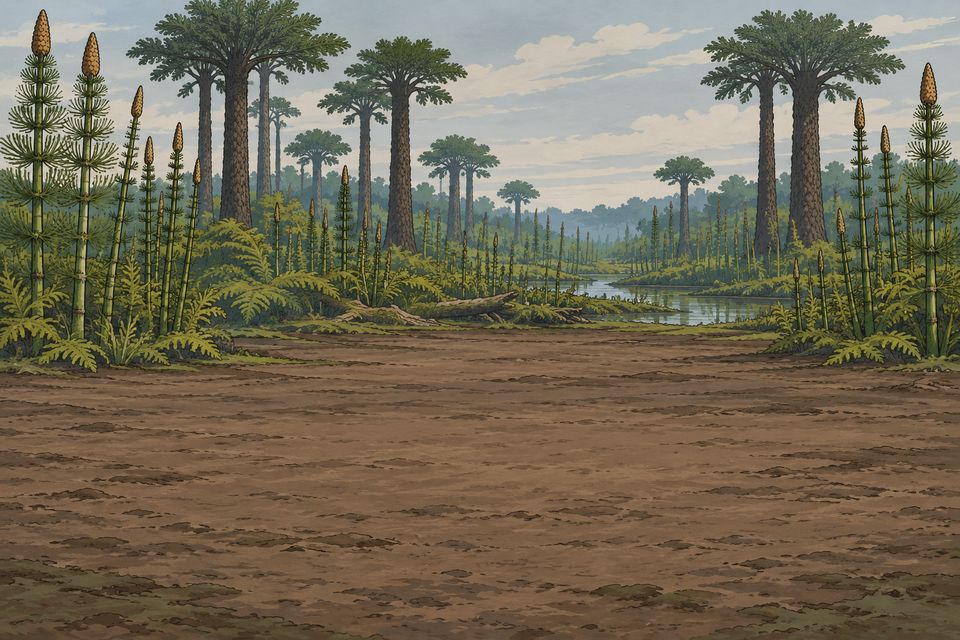
Your early life would probably have been spent as an aquatic nymph in pools and swamps, hunting small animals underwater as modern dragonfly larvae do, before emerging as a winged adult. The landscape around you was a coal forest of giant club mosses, horsetails and tree ferns – the same forests whose remains became much of the world’s coal.
The first Meganeura fossils were found in 1880 in coal deposits at Commentry, France.