Diictodon
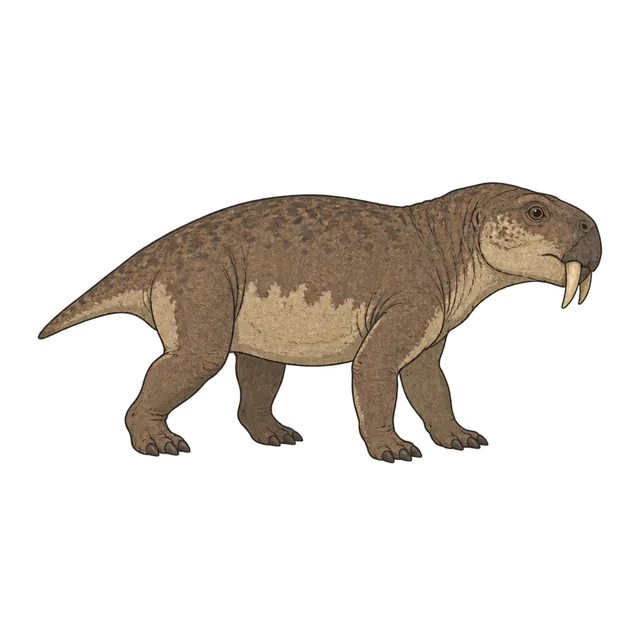
Reborn as Diictodon, you would be a stocky, beaked burrower about the size of a cat, sporting a pair of tusks and spending a lot of your time underground.
Beak, tusks, burrow
Diictodon was a dicynodont, a group of plant-eating synapsids (early relatives of mammals) with toothless, turtle-like beaks. You would be roughly 45 cm long, with a short tail, strong forelimbs and, in many individuals, a pair of tusks growing from the upper jaw. Some researchers think the tusks were present mainly in males, which would suggest a role in display or rivalry.
Your body was compact, with a large head relative to your size and short limbs. Diictodon’s skull had a wide gape, and the horny beak – much like a turtle’s – could snip tough stems and dig out roots.
Life in a spiral
Diictodon is famous for its burrows. In the Karoo Basin of South Africa, palaeontologists have found corkscrew-shaped burrows, some with Diictodon skeletons inside – sometimes in pairs. A spiral tunnel would keep you cool in the heat, insulated from cold nights and safe from predators, and possibly sheltered your young.
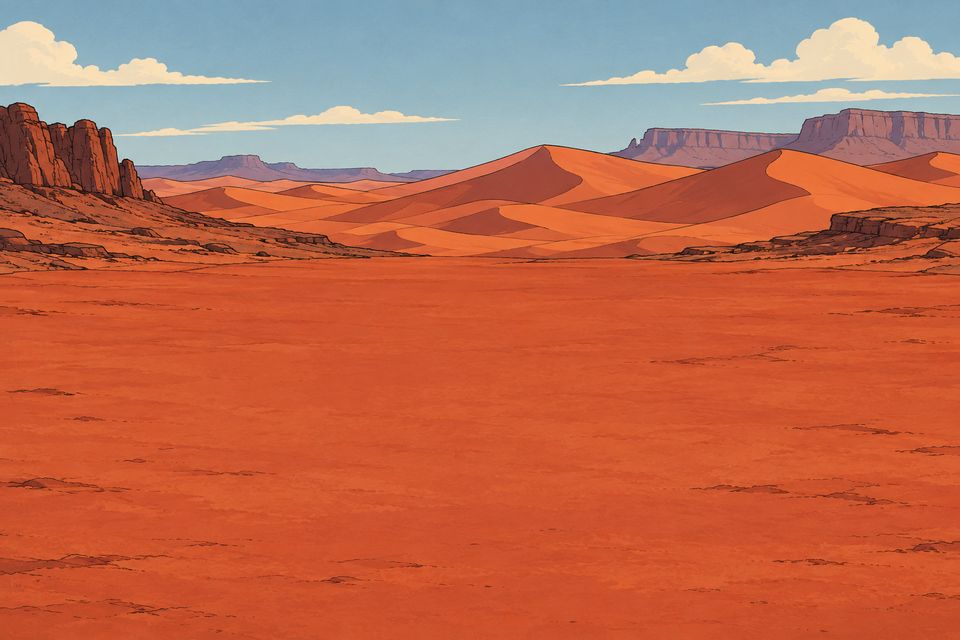
You would use your beak to crop low vegetation and roots, and your strong forelimbs and head to dig. Your enemies would include gorgonopsians and other carnivorous synapsids that roamed the same semi-arid floodplains.
Extremely common
Diictodon was one of the most abundant animals of the late Permian Karoo, known from hundreds of specimens; it is also known from China. It lived roughly 260–252 million years ago and died out in the end-Permian extinction, though other dicynodonts, like Lystrosaurus, survived into the Triassic.
The burrowing habit may have been a key to its success. Living underground protected animals from the extreme heat, drought and cold snaps of the Permian, and the same habit may have helped later dicynodonts survive the end-Permian crisis.