Diplocaulus
If you are reborn as Diplocaulus, your head will be shaped like a boomerang – wider than your body is long in the case of big adults – and you will spend your life in the water.
The boomerang head
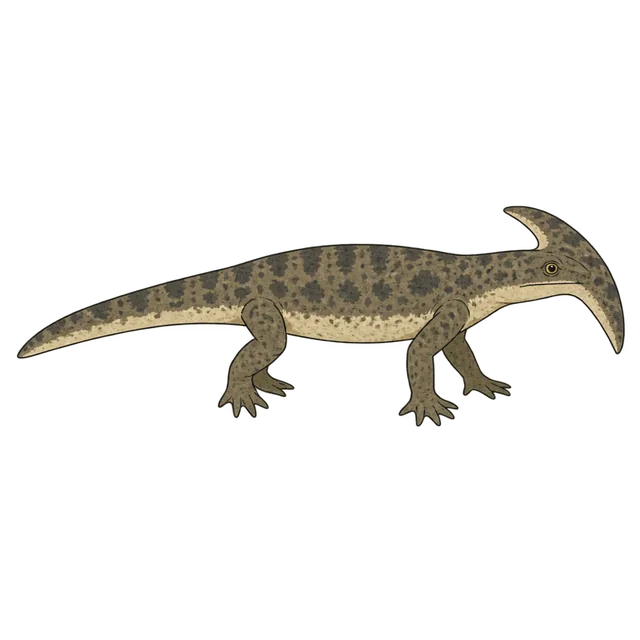
Diplocaulus was a lepospondyl, a member of an extinct group of small early amphibians. Large individuals reached around 1 m in length. Your body was flattened, with small, weak limbs and a long tail, but your head was the main event: bony “horns” swept out to each side, forming a broad boomerang shape. Young Diplocaulus had narrow heads; the wings grew larger with age.
Your eyes sat on top of your head, looking upward, as in many bottom-dwelling animals. Your skin probably needed to stay moist, as in modern amphibians, so you would rarely leave the water. With your short legs you would move mainly by swimming with side-to-side strokes of your body and tail.
Why the shape?
Nobody knows for certain. One idea is that the head worked like a hydrofoil, giving lift and helping you rise quickly from the bottom or swim against a current. Another is defence: a wide head is hard to swallow. Bitten Diplocaulus remains found alongside Dimetrodon teeth in Texas have been interpreted as evidence that the sail-backed predator ate them – so the boomerang head did not save every individual.
Waterside life
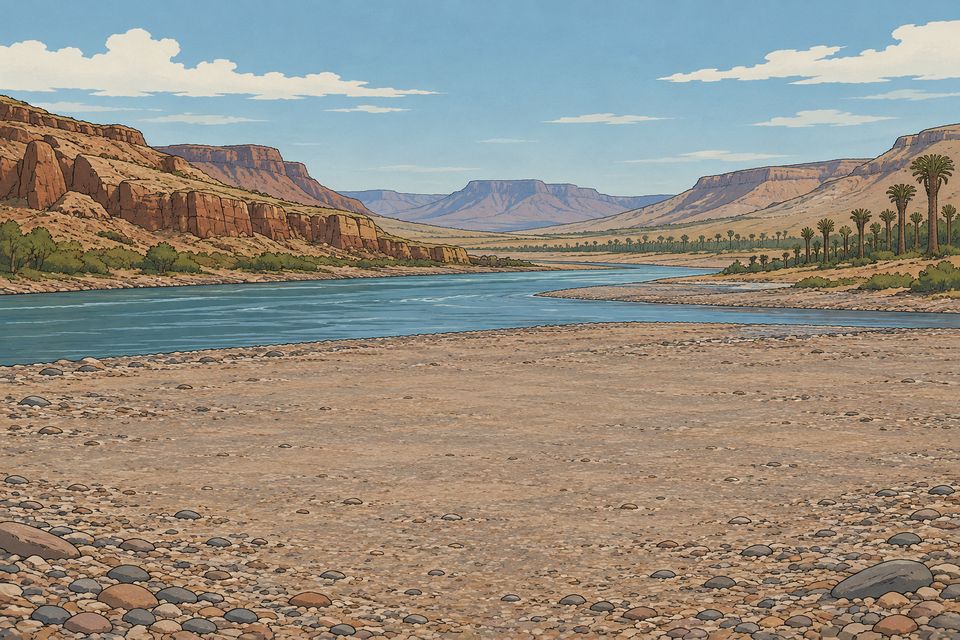
You would live in streams, ponds and swamps in the early Permian of North America, roughly 300–270 million years ago, with relatives in Morocco. Your diet would consist of small fish, invertebrates and whatever you could catch near the bottom. When ponds dried, burrowing into mud may have been a survival strategy, as it is for some amphibians and lungfish today. Its fossils are often found in groups.