Hydra
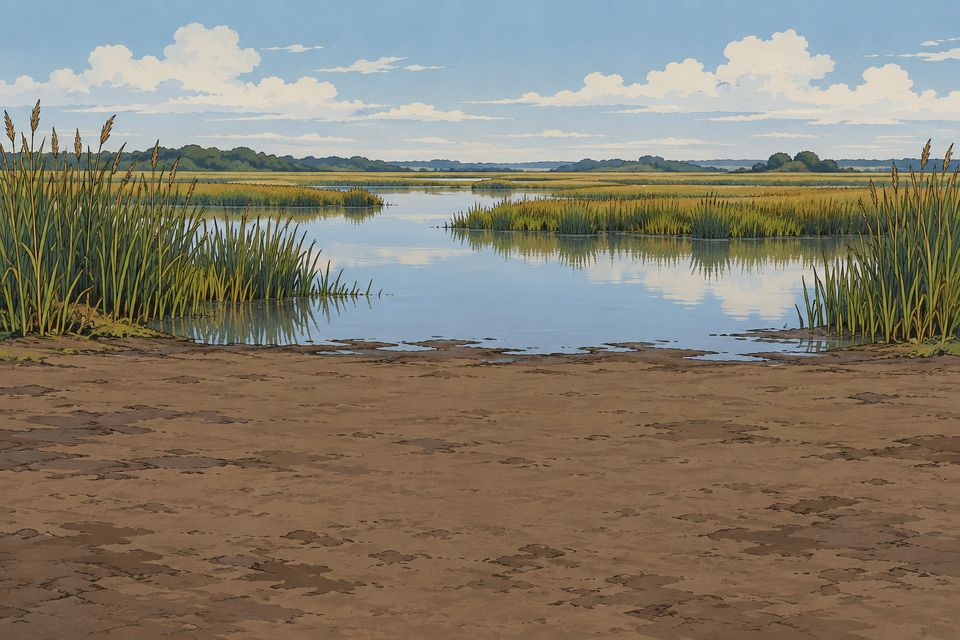
As a Hydra you would be a tiny green or brown tube clinging to a pondweed stem, tentacles waving, waiting for a water flea to swim into range – and you might, in principle, never grow old.
A simple hunter
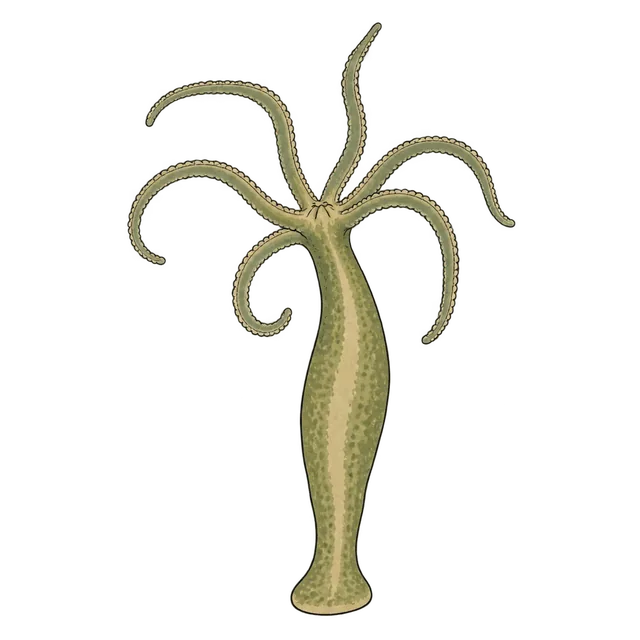
Hydra is a freshwater relative of jellyfish and corals, a polyp usually up to 1–2 centimetres long when stretched out. Its body is a tube with two cell layers, a sticky foot at one end and a mouth ringed by five to twelve tentacles at the other. The tentacles carry stinging cells, nematocysts, which fire tiny harpoons and toxins into prey such as water fleas, copepods and insect larvae. Prey is pushed into the mouth and digested in the body cavity; leftovers come back out the same way.
Hydra viridissima looks green because it hosts symbiotic Chlorella algae in its cells, which share sugars in exchange for shelter.
Cut it, and it regrows
In the 1740s the Swiss naturalist Abraham Trembley cut hydras into pieces and watched each piece regrow into a complete animal. He even turned some inside out. The results stunned 18th-century scientists and helped launch experimental biology. The name refers to the many-headed monster of Greek myth that grew new heads when one was cut off. Hydra’s secret is a body made largely of stem cells that keep dividing, while old cells are shed at the tip of the tentacles and the foot.
Possibly ageless
Because its tissues constantly renew themselves, Hydra shows little or no sign of ageing in the lab. A study published in 1998 by Daniel Martínez followed hydras for four years without seeing their death rate increase, and later longer studies found the same. In the wild, though, life ends early – eaten by fish, flatworms or other predators, or killed when ponds freeze or dry. In good times you would reproduce by budding small clones from your side; in autumn many hydras switch to sexual reproduction and leave resistant eggs to survive winter.