Daphnia
As a Daphnia you would be a transparent, hopping crustacean a few millimetres long, with one big compound eye and a heart you could watch beating through your own shell.
Rowing with antennae
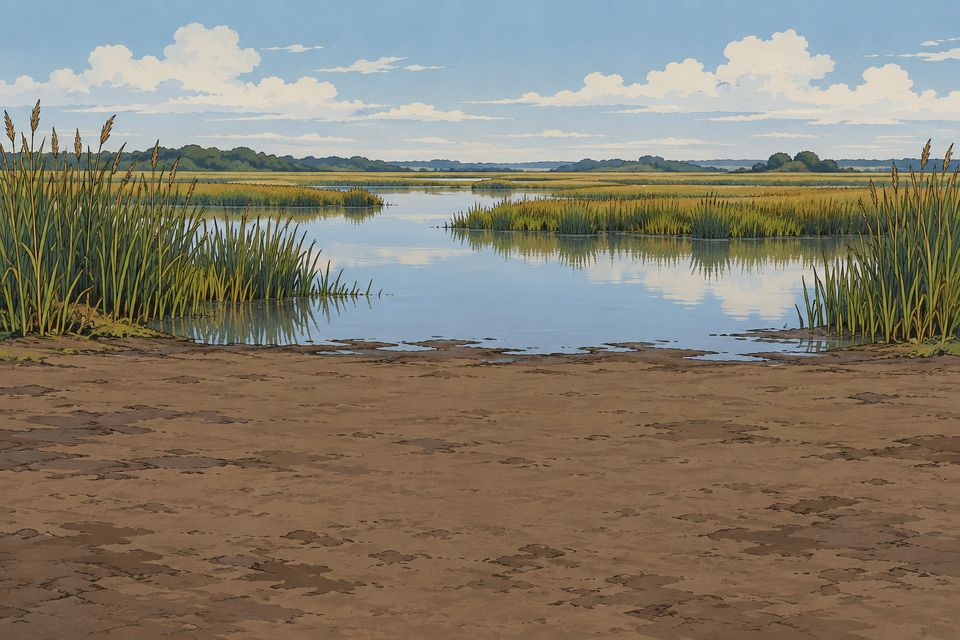
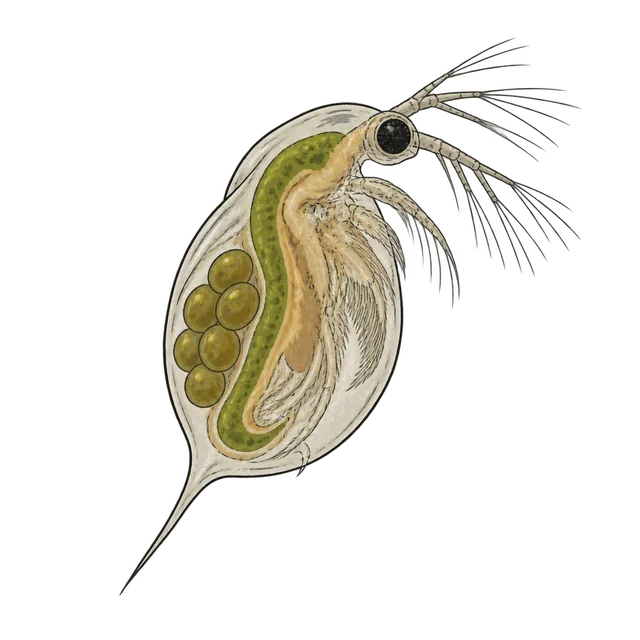
Daphnia, the water flea, is a small crustacean, typically 1–5 millimetres long, found in ponds and lakes worldwide. It is not a flea at all; the name comes from its jerky, hopping swimming, powered by strokes of a large pair of branched antennae. Its body sits inside a transparent carapace, so under a microscope you can see the gut filled with green algae, the eggs in the brood pouch and the heart beating, often 200 or more times a minute depending on temperature.
You would feed by filtering: your legs beat constantly, drawing water through fine bristles that catch algae, bacteria and particles of debris.
Clones, males and winter eggs
For most of the year Daphnia populations consist only of females that reproduce by parthenogenesis, producing clutches of genetically identical daughters every few days. A single female can found a large population in weeks. When conditions worsen – crowding, shortening days, falling temperatures – some eggs develop into males, and sexual reproduction produces resting eggs in a tough case, the ephippium. These can survive drying and freezing, and some have hatched after decades in lake sediments.
Helmets and a bigger role
Daphnia is food for fish, insect larvae and the phantom midge larva Chaoborus. When some species detect chemical cues from predators, they grow defensive helmets and neck spines – a classic example of a plastic response to danger. Many also migrate daily, sinking into dark, deep water by day and rising at night to feed. By grazing algae, Daphnia keeps lakes clear, and because it is sensitive to pollutants, it is a standard test animal in water toxicity testing. Your life would last from a few weeks to a few months.