Lystrosaurus
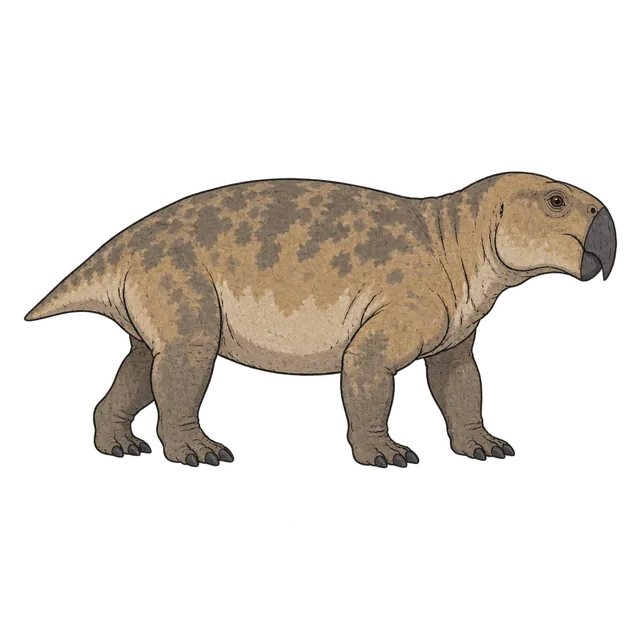
Reborn as a Lystrosaurus, you would be a stocky, beaked herbivore with two tusks – and one of the few survivors of the worst mass extinction in Earth’s history.
Survivor of the Great Dying
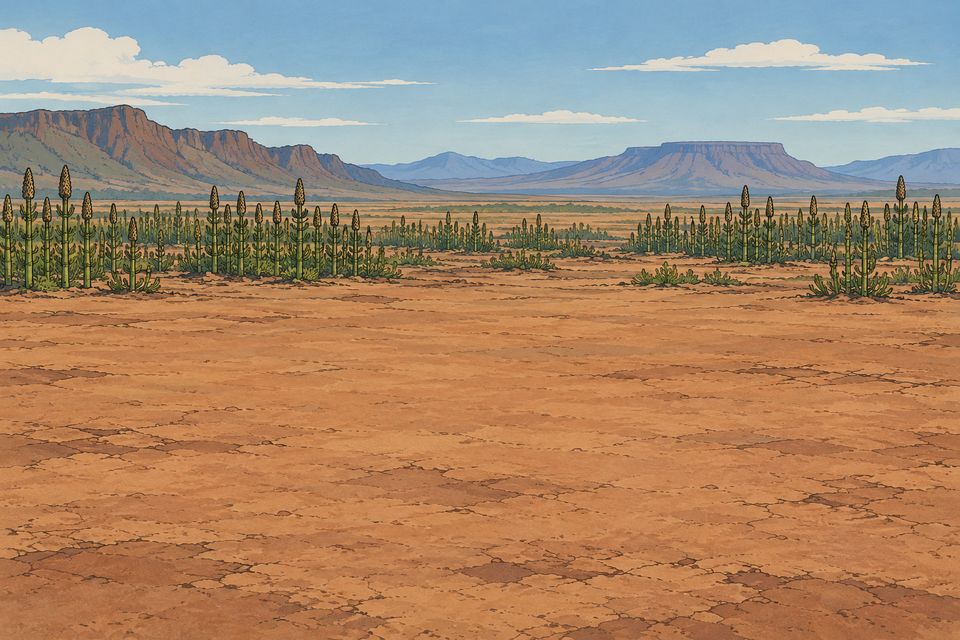
About 252 million years ago, at the end of the Permian, massive volcanic eruptions in what is now Siberia triggered global warming, ocean acidification and the collapse of ecosystems. Roughly 80–90% of marine species and most land vertebrates died out. Lystrosaurus made it through, and in the early Triassic it became astonishingly common: in parts of South Africa’s Karoo Basin, it makes up a very large share of the vertebrate fossils from the earliest Triassic rocks.
It was not a dinosaur – dinosaurs had not yet appeared. Lystrosaurus was a dicynodont, a member of the synapsids, the broader group that also includes mammals and their ancestors.
Beak, tusks and burrows
Most species were about the size of a pig or smaller, around 1 metre long, with a short, deep skull, a horny beak and two tusks growing from the upper jaw. You would spend the day cropping and slicing tough plants, perhaps digging for roots and tubers. Some Lystrosaurus fossils have been found curled up in what appear to be burrows in Antarctica and South Africa, suggesting they could dig shelters to escape heat, cold or drought. A study of tusks from Antarctica showed signs of a hibernation-like dormancy during polar winters.
Live fast, die young
Growth studies show that many Lystrosaurus individuals died young, probably reproducing early in life – a strategy that suits unstable, harsh environments. In this life you would probably not grow old.
Its fossils also played a role in science: Lystrosaurus found in Antarctica in 1969, as well as in Africa and India, helped support the theory that these continents were once joined in Pangaea.