Bothriolepis
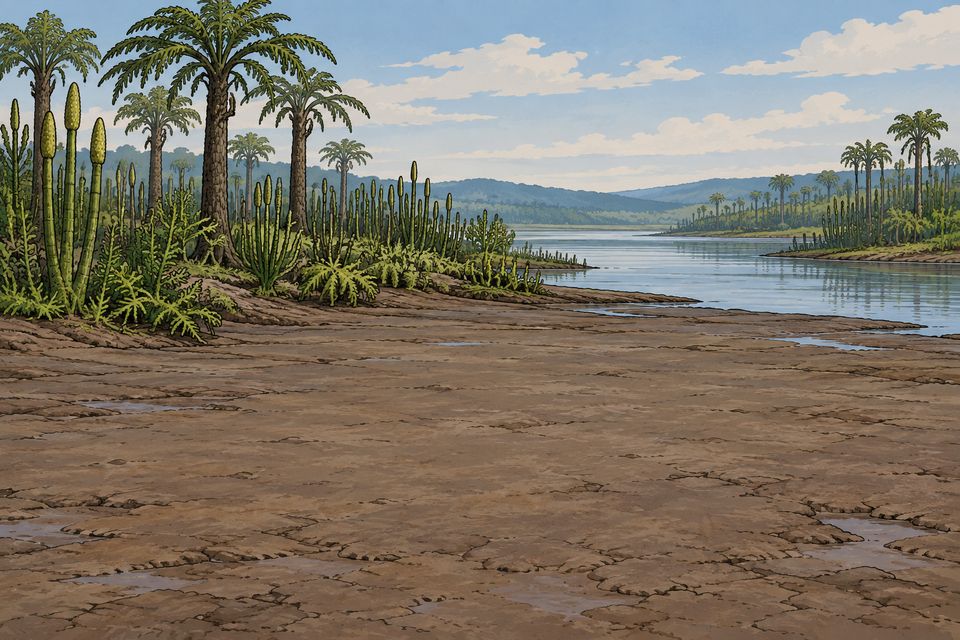
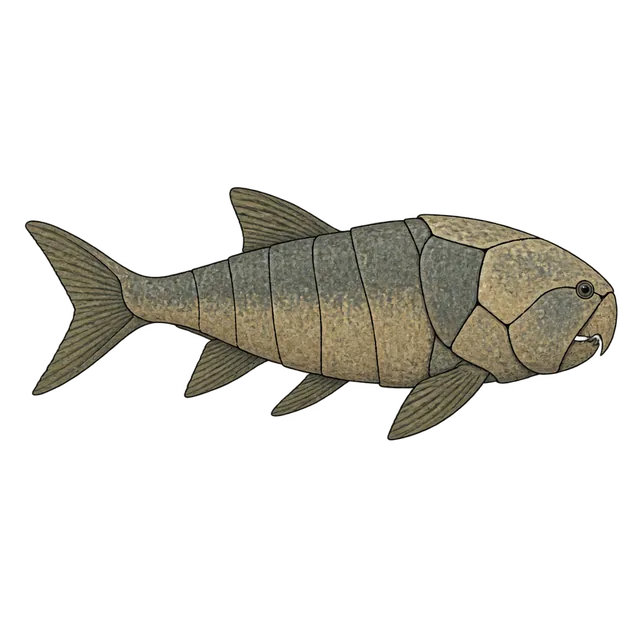
Reborn as Bothriolepis, you would live inside a bony box, poking about on the bottom of a Devonian river with two jointed arms that look borrowed from a crab.
A box with arms
Bothriolepis was an antiarch, one of the most common kinds of placoderm, or armoured fish. Most species were 30 cm or less, though some grew larger. Your head and trunk were covered by a box of bony plates, with small eyes set close together on top of the head, looking upward.
Instead of normal pectoral fins you had two long, narrow appendages encased in bone and hinged in the middle like elbows. They may have helped you prop yourself up, push through mud, or steady yourself in currents. Behind the armour, your tail was soft and scaly.
Grazing the riverbed
With its mouth on the underside of the head, Bothriolepis is usually interpreted as a bottom feeder, sifting mud and organic detritus or grazing on soft material. You would spend much of your time near the bottom of rivers, lakes and estuaries, keeping a wary upward watch for larger fish and early tetrapod relatives.
Some researchers have suggested that Bothriolepis had paired lung-like structures, but this is debated; what is certain is that it lived in shallow, oxygen-variable waters.
A fossil everywhere
Bothriolepis is one of the most widespread Devonian vertebrates, with more than 100 species described from every continent, including Antarctica. Miguasha National Park in Quebec, a UNESCO World Heritage Site, has yielded thousands of specimens. You lived roughly 387–360 million years ago and, like all placoderms, disappeared at the end of the Devonian.
Because so many complete specimens survive, Bothriolepis has become a model animal for studying how early jawed vertebrates grew and how their armour changed with age.