Anomalocaris
Reborn as Anomalocaris, you would be one of the first big hunters on Earth – a flapping, wide-eyed swimmer cruising over a seafloor full of small, nervous animals.
Built for the hunt
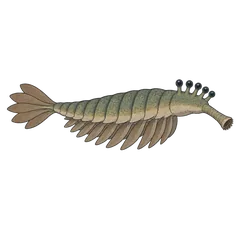
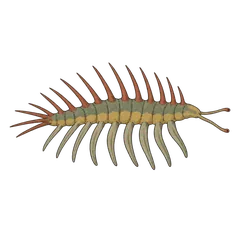
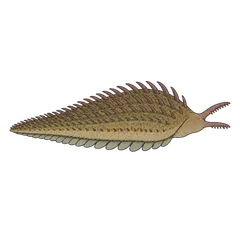
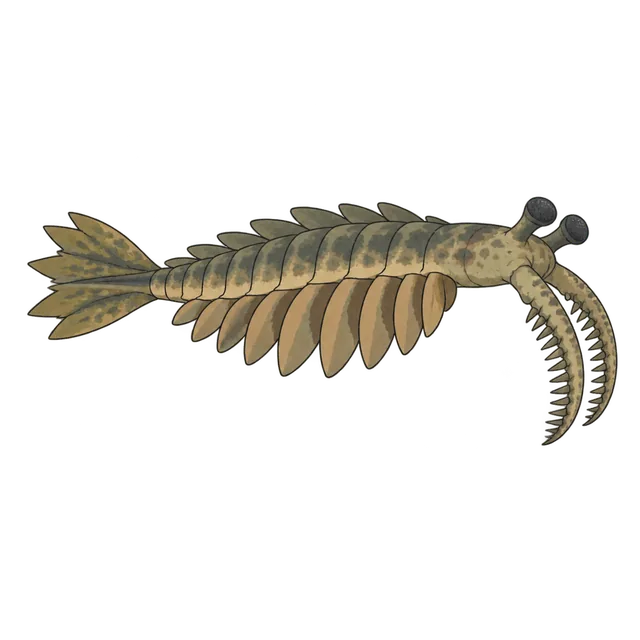
Anomalocaris belonged to the radiodonts, early relatives of arthropods. Your body was a flattened, segmented torpedo edged with overlapping flaps that rippled in waves to push you through the water, with a fan of tail blades for steering. Most specimens point to a length of a few tens of centimetres – huge for the Cambrian.
At the front you carried two curved, spiny appendages for grabbing prey, and beneath the head sat a round mouth ringed with plates. On stalks above it were large compound eyes; fossil eyes from Australia’s Emu Bay Shale, attributed to Anomalocaris, had more than 16,000 lenses each.
What was on the menu
For decades Anomalocaris was pictured crunching trilobites. Biomechanical studies of its grasping arms and mouth now suggest those structures were too delicate for hard shells. More likely, you would chase down soft, fast-moving prey in open water, snatching it with your spines and passing it to your mouth.
Your own enemies would be few once fully grown, but as a juvenile you would be just another snack in a crowded sea.
A puzzle in pieces
The animal was first known only from separate parts. Its isolated grasping arm was thought to be the body of a shrimp – hence the name, meaning “unlike other shrimp” – while its circular mouth was described as a jellyfish. Only in the 1980s did researchers working on Burgess Shale fossils realise all the pieces belonged to one creature.
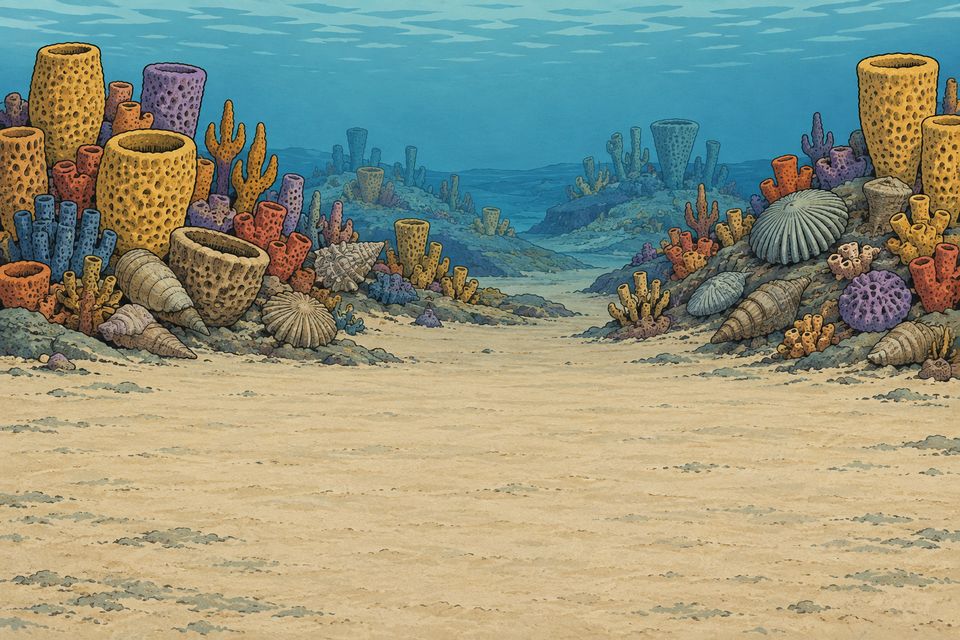
Your world was around 508–515 million years old: shallow, warm seas where animal life was diversifying fast. Famous fossils come from the Burgess Shale in Canada and the Emu Bay Shale in Australia; close relatives are known from Chengjiang in China.