Trilobite
As a trilobite you would spend your days ploughing through seafloor mud, looking out at the world through eyes made of actual crystal.
A body in three lobes
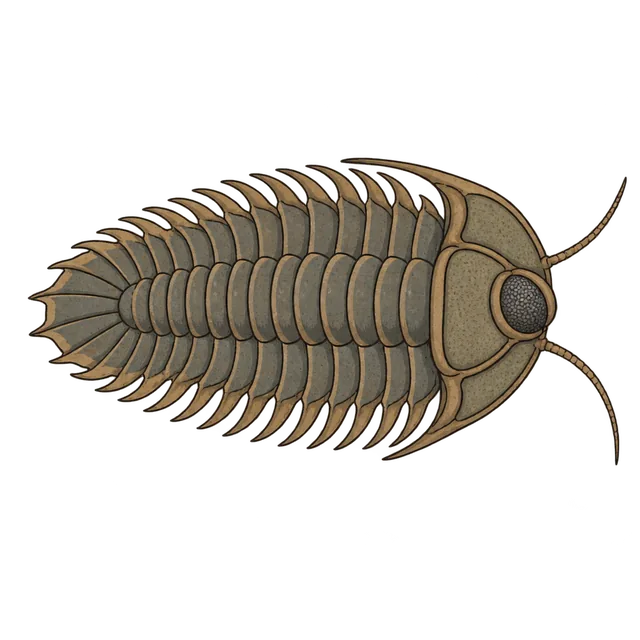
The name means “three-lobed”: a raised central axis runs from head to tail, flanked by two flatter side lobes. Underneath the hard dorsal shield you would have a row of jointed legs, each with a walking branch and a feathery gill branch, plus a pair of antennae for feeling your way through murky water.
Your eyes are the star feature. Trilobite lenses were made of calcite, the mineral of limestone, which is why they fossilise so well. Some species had a few hundred large lenses, others thousands of tiny ones packed together like a fly’s compound eye. Not every species could see, though. Some trilobites living in deep or dark water lost their eyes entirely, while others developed eyes on tall stalks.
Making a living in the mud
Most trilobites were bottom dwellers. Depending on the species, you might sift sediment for organic scraps, scavenge carcasses, or hunt worms. Fossil trackways and resting traces – ploughed furrows and paired scratch marks – show trilobites walking, digging and pausing on the seabed.
Growth was awkward. Your exoskeleton could not stretch, so you had to moult repeatedly, splitting along pre-set seams and crawling out soft and vulnerable. Many trilobite fossils are not dead animals at all but discarded old shells.
Dangers and the long goodbye
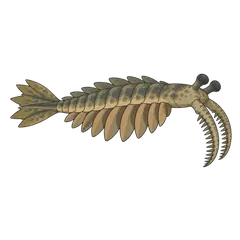
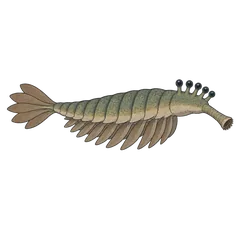
Cambrian seas held predators such as Anomalocaris, and healed bite injuries on some trilobites show that attacks happened. Your best defence was to roll up like a woodlouse, tucking legs and soft underside inside the shell. Fossils of enrolled trilobites are common.
As a group, trilobites were spectacularly successful. They appeared around 521 million years ago and survived several mass extinctions, dwindling slowly until the last ones vanished in the end-Permian catastrophe about 252 million years ago.