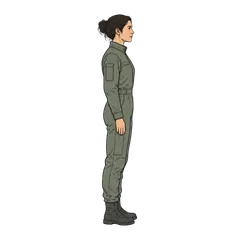
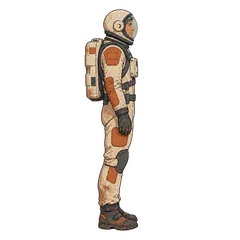
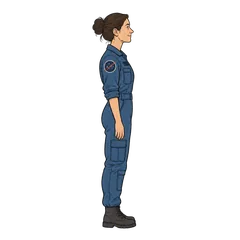
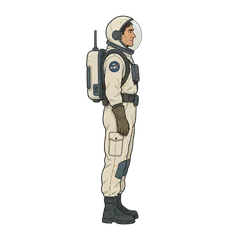
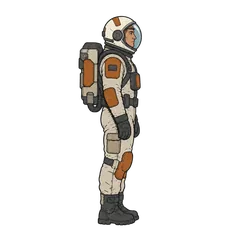
Shuttle pilot
As a shuttle pilot you would fly the most dangerous parts of any trip – launch, docking and re-entry – increasingly as a supervisor of automation that only hands you the controls when it really matters.
Learning from the Space Shuttle
NASA’s Space Shuttle flew 135 missions between 1981 and 2011 and was the closest thing yet to a reusable spaceplane. Its orbiter glided back unpowered, landing on a runway at about 340 kilometres per hour, so commanders practised thousands of approaches in modified jets. The programme also showed the costs of reusability: refurbishment was slow and expensive, and the Challenger (1986) and Columbia (2003) disasters killed 14 astronauts.
Today, SpaceX’s Falcon 9 boosters routinely land and fly again, and capsules like Crew Dragon dock with the ISS automatically, with pilots monitoring and able to take over.
What the job involves (partly speculative)
A future transport pilot running between orbital stations and a Mars base would plan trajectories, monitor engines and life support, manage docking and undocking and fly or supervise landings. Re-entry is the most violent phase: heat shields face temperatures of well over 1,500 °C, and on Mars the thin atmosphere slows a craft far less than Earth’s, so landings depend on rocket braking in the final seconds.
Pilots would rely heavily on simulators. Because communications with Earth are delayed, crews landing on Mars would have to handle problems without real-time help, as robotic landers already do autonomously during the so-called seven minutes of terror.
Body and routine
Launch and re-entry would put several g of force on your body; after long periods in weightlessness, pilots face dizziness and weak muscles just when they need their sharpest reflexes – one reason missions plan for the effects of adaptation. Between flights the work would look like that of airline crews today: checklists, maintenance briefings, rest rules and endless training.