Orbital station engineer
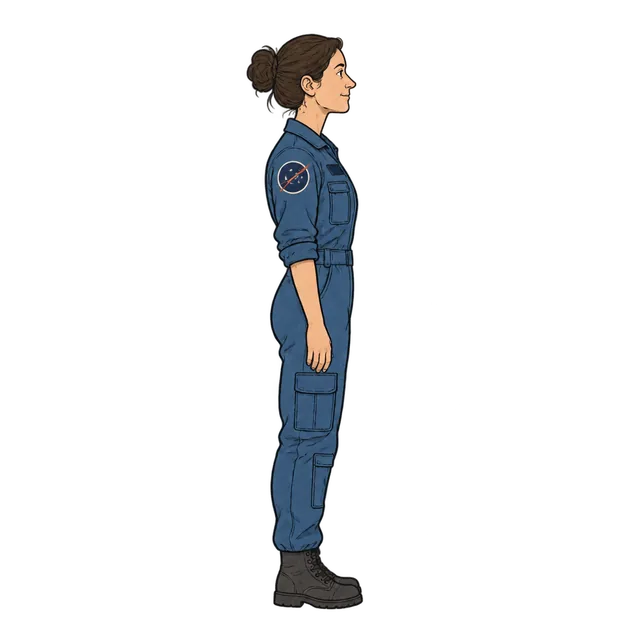
As a station engineer you would be the person keeping a sealed metal can full of humans alive at 28,000 kilometres per hour – where a tiny air leak counts as a serious emergency.
Learning from the ISS
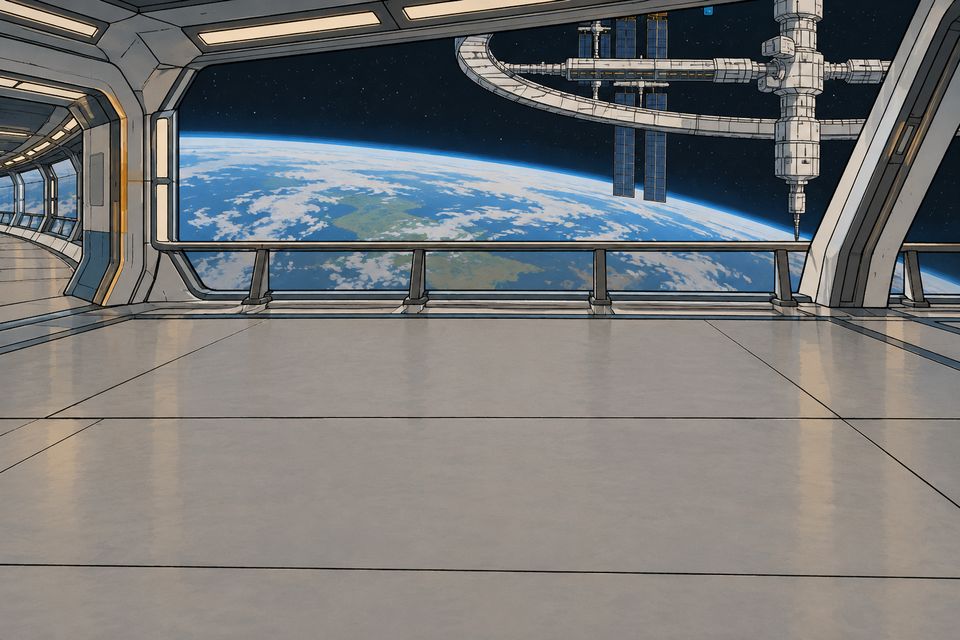
The International Space Station, continuously inhabited since November 2000, is the best model for this job. It orbits at roughly 400 kilometres, circling Earth about every 90 minutes, so crews see around 16 sunrises a day. Astronauts already spend a large share of their time on maintenance: replacing pumps and filters, fixing toilets, swapping batteries and troubleshooting computers, guided by flight controllers on the ground.
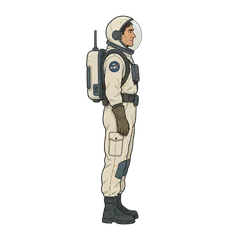
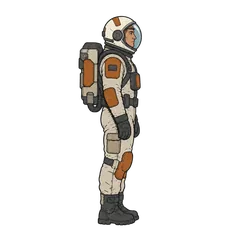
Spacewalks are the most demanding part. An EVA typically lasts around six to seven hours, and the suit itself is a small spacecraft that must be carefully maintained.
Systems you would babysit (speculation)
On a future commercial or larger station, an engineer would likely oversee the same core systems: oxygen generation by splitting water, carbon dioxide removal, water recycling that already recovers about 98 per cent of water on the ISS, thermal control radiating heat into space, power from solar arrays, and the station’s pressure hull.
Leaks would be a recurring headache. In 2018 a small hole in a Soyuz spacecraft docked to the ISS was found and sealed, and a slow leak in the Russian Zvezda module’s PrK tunnel has been tracked for years. Microgravity also changes basic tasks: screws float away, liquids form blobs and fires behave differently.
Living on the job
You would never quite leave work: your bedroom would be a few steps from the machinery you maintain. Exercise of around two hours a day would be needed to slow bone and muscle loss. Several private stations, including Axiom’s, Vast’s Haven-1 and Starlab, are in development as successors to the ISS, which NASA plans to deorbit around 2030.