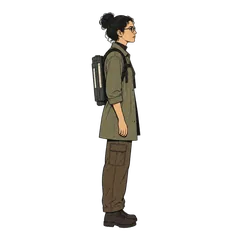
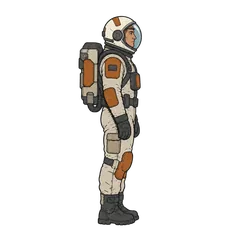
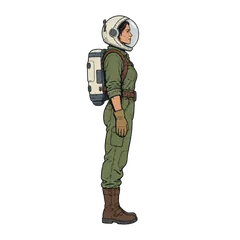
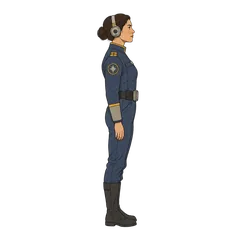
Orbital station janitor
As an orbital janitor you would discover that dirt does not fall in space – it floats, drifts into the air vents and, given enough time, grows.
Housekeeping without gravity
On Earth dust settles on the floor. In microgravity, crumbs, skin flakes, hair and droplets stay airborne until the ventilation carries them to the intake filters. On the International Space Station, cleaning is already part of the weekly schedule: crews spend time on a regular housekeeping day vacuuming filters and grilles, wiping surfaces with disinfectant wipes and checking hidden corners.
Food is designed to make this easier – astronauts use tortillas instead of bread because they produce fewer crumbs, and salt and pepper come in liquid form so the grains do not drift into equipment or eyes.
The microbes are crew too
Wherever people go, their microbes go with them. Studies of the ISS have found bacteria and fungi on surfaces, mostly harmless species associated with human skin. On the old Russian station Mir, which flew from 1986 to 2001, mould grew behind panels and in condensation, and samples of fungi were collected from damp spots. Condensation behind equipment, where air does not circulate well, is the main danger zone.
In a closed habitat, cleaning protects both people and hardware: some microbes can degrade plastics, rubber seals and even metal, and they may behave differently in space than on Earth.
Rubbish with nowhere to go (speculation)
Today ISS trash is packed into departing cargo ships that burn up in the atmosphere. A future station with a dedicated cleaning crew would likely sort and recycle far more – NASA has tested trash compactors and heat-melt systems that turn waste into tiles for radiation shielding. Robotic helpers could take over routine wiping, leaving humans the tricky jobs: hunting a smell, cleaning up a leak or chasing an escaped blob of soup.