Crinoid (sea lily)
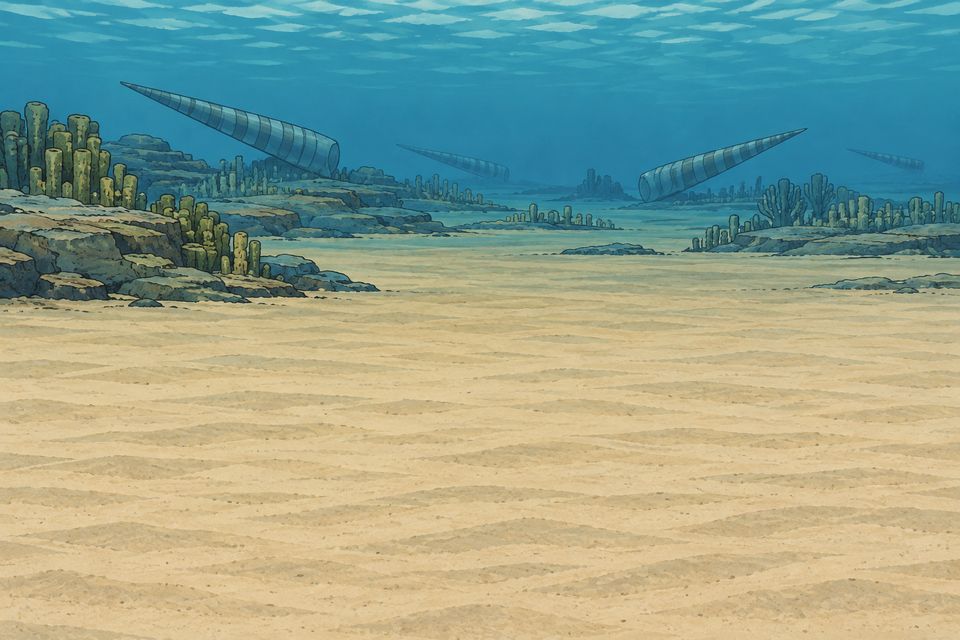
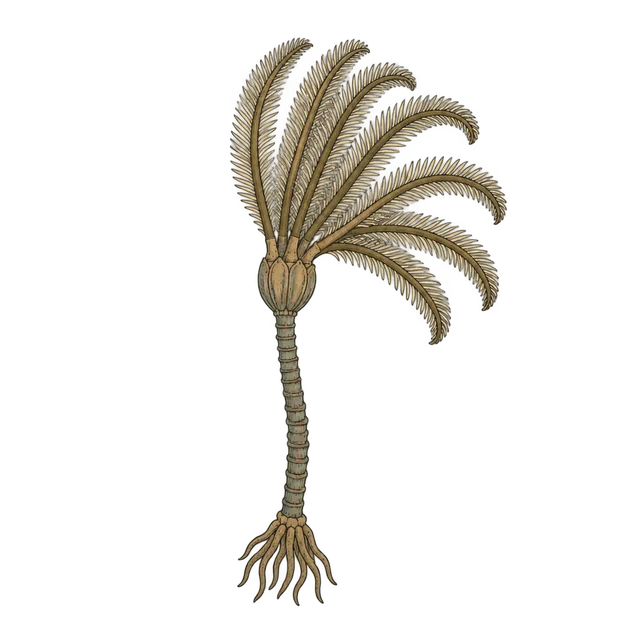
Reborn as a crinoid, you would look like a flower but be an animal – rooted to the Ordovician seafloor on a stalk, fishing for food with a crown of feathery arms.
An animal disguised as a plant
Crinoids are echinoderms, relatives of starfish and sea urchins. A typical stalked crinoid has a holdfast anchoring it to the seabed, a long flexible stem made of stacked, disc-shaped plates called columnals, and a cup-shaped body, the calyx, topped with branching arms. Your mouth would be at the top of the cup, facing upward, surrounded by those arms.
You would have no brain, no eyes and no heart in the usual sense, just a nerve ring and a water-vascular system that powered your tube feet. Some species could slowly bend their stems or even detach and relocate if conditions became bad.
Fishing with your arms
You would spread your arms into a fan facing the current, catching plankton and organic particles on tiny tube feet. Grooves along the arms carried food down to your mouth. In the Paleozoic, crinoids grew in dense meadows, and the higher you stood, the better your access to food-laden currents – a kind of underwater skyline of filter feeders at different heights.
Predation was a real danger. Fossil crinoids sometimes show regenerated arms and drill holes made by snails, and the rise of fish able to crush shells may have pushed many stalked crinoids into deeper water later on.
Leaving limestone behind
Crinoids appeared in the Ordovician, around 480 million years ago, and were so abundant in the Paleozoic that whole limestone formations are made largely of their broken stems. Disc-shaped columnals were once known in England as “St Cuthbert’s beads”. Crinoids survived the end-Permian extinction in reduced numbers, and about 600 species still live today, most of them stalkless feather stars.