Sarcosuchus
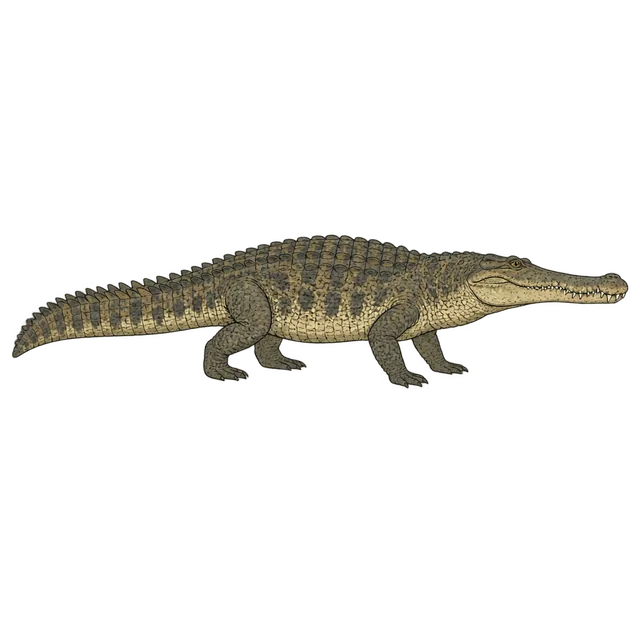
Life as a Sarcosuchus starts as a hatchling small enough to fit in a hand and, with luck and half a century of patience, ends as a nine-metre river monster.
Rivers where the Sahara is now
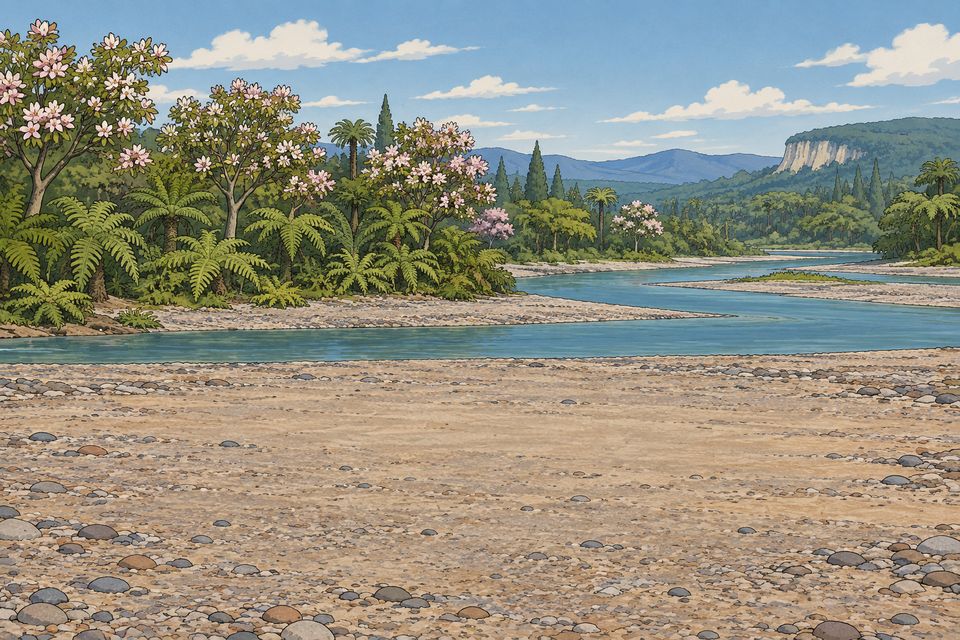
About 112 million years ago, the area now known as Gadoufaoua in the Ténéré Desert of Niger was a land of broad rivers, floodplains and lush vegetation. Sarcosuchus imperator shared it with the sail-backed iguanodontian Ouranosaurus, the spinosaurid Suchomimus and many fish and turtles. A second species, S. hartti, is known from Brazil – a reminder that Africa and South America were only just separating. The genus was named in 1966 by France de Broin and Philippe Taquet.
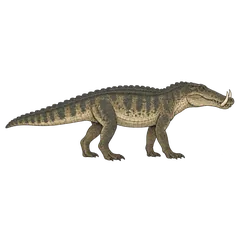
It was a pholidosaurid, a distant relative of true crocodiles, and not a dinosaur.
The SuperCroc expeditions
Expeditions led by Paul Sereno in 1997 and 2000 dug up about half a skeleton and several skulls, the largest roughly 1.6 metres long. Current estimates put big adults at around 9–9.5 metres and perhaps 4–8 tonnes. Growth rings in the bony back plates suggest it kept growing for something like 50–60 years. The snout ended in a bulbous swelling, the bulla, whose purpose – a resonating chamber for sounds, or a display feature – remains debated.
A generalist’s diet
The long, fairly slender snout and the teeth, more robust than a fish-eater’s, suggest a generalist that ate a lot of fish but would not have refused a dinosaur coming to drink. As a predator in the gharial-meets-crocodile mould, you would spend the day basking, the night hunting and long stretches waiting.
For a young Sarcosuchus, danger came from large fish, other crocodile relatives and theropods hunting along the banks. For an adult, the main threats would be rivals of its own species and the slow drying of the rivers.