Woolly mammoth
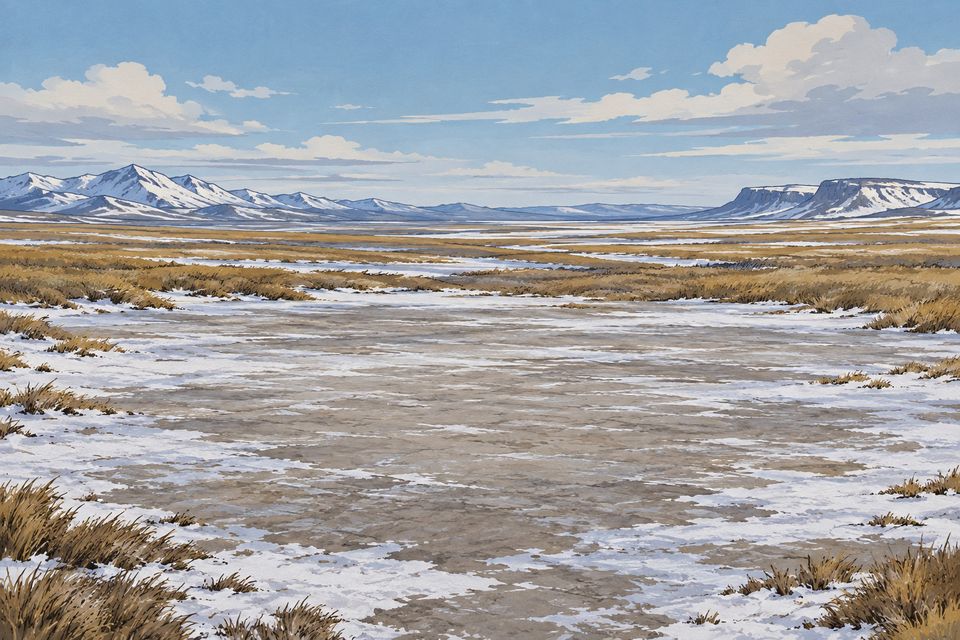
As a woolly mammoth you would walk the cold, grassy mammoth steppe in a shaggy coat, eating for most of the day and sweeping snow aside with your tusks to reach the grass below.
Dressed for the cold
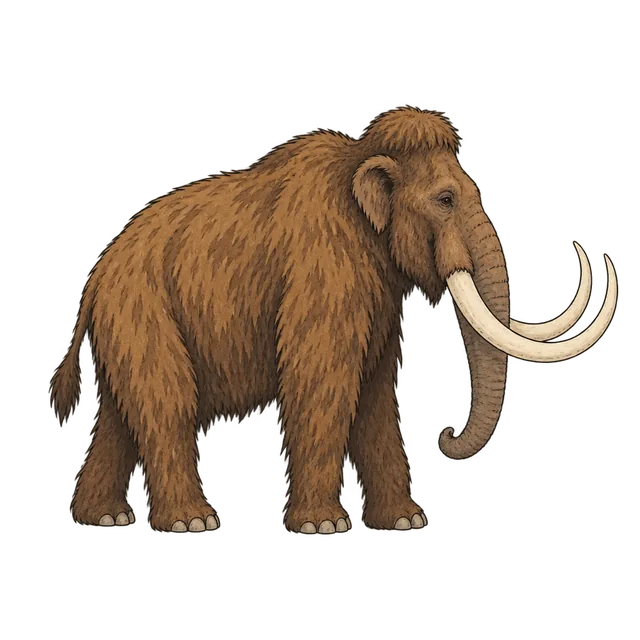
Woolly mammoths were about the size of modern African elephants or slightly smaller, with males standing around 3 m at the shoulder and weighing roughly 6 tonnes. You would have a thick undercoat beneath long guard hairs up to about 90 cm, a layer of fat, small ears and a short tail – all features that reduce heat loss. Your tusks could grow to over 4 m in old males and curved outward and up.
Frozen carcasses from Siberia, such as the baby mammoth Lyuba found in 2007, have preserved skin, hair and even stomach contents, so much of this is known directly rather than guessed.
A day of grazing
The mammoth steppe was a vast, dry grassland stretching from Spain across Asia to Canada. You would feed on grasses, sedges, herbs and shrubs, possibly up to 180 kg a day, and replace your ridged, grinding molars six times over a lifetime. Mammoths probably lived in herds of related females and young, led by an older matriarch, as elephants do; adult males roamed more independently.
Mammoth tusks contain growth layers like tree rings. Isotope analysis of a tusk from Alaska showed that one male walked a distance equivalent to circling the Earth almost twice during his life.
Hunters and the last mammoths
Your main predators as an adult would be humans. Neanderthals and modern humans hunted mammoths and used their bones and tusks for tools, art and even dwellings in Ukraine and Russia. Mainland populations disappeared around 10,000 years ago as the climate warmed and the steppe shrank, while a small isolated group survived on Wrangel Island in the Arctic Ocean until about 4,000 years ago.