Liopleurodon
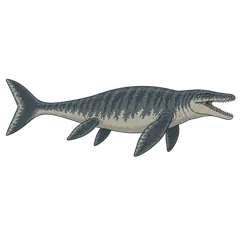
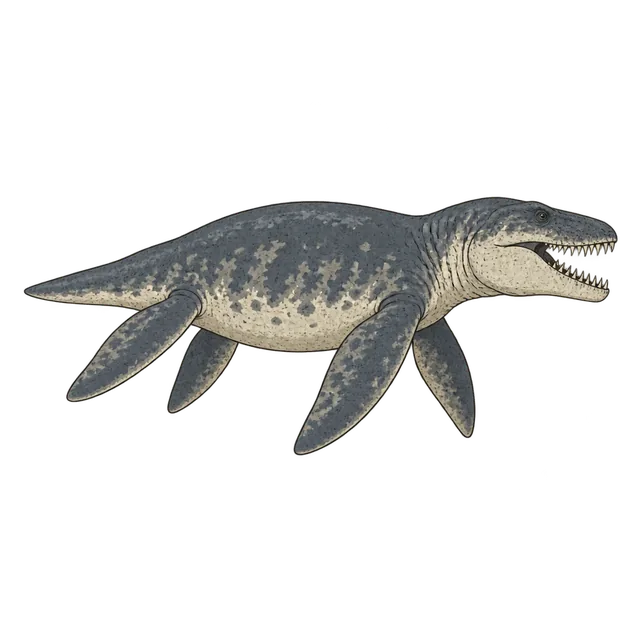
As a Liopleurodon you would be the stuff of Jurassic nightmares – though, despite your internet fame, closer in size to an orca than to a blue whale.
The Oxford Clay sea
Liopleurodon lived about 166 to 155 million years ago, in the Middle and Late Jurassic, in a warm, shallow sea that covered much of what is now England and France. Its bones come mainly from the Oxford Clay, a rock unit packed with ammonites, fish and marine reptiles. It was named in 1873 from a few teeth found in France; the name means ‘smooth-sided teeth’.
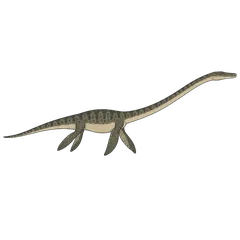
It was a pliosaur: a short-necked, big-headed member of the plesiosaurs. A marine reptile, then, and not a dinosaur. Complete skeletons are rare: most specimens are skulls, teeth and isolated bones, so many details of its appearance are reconstructed by comparison with related pliosaurs.
How big, really?
A 1999 television documentary made it 25 metres long, and the image stuck. The fossils suggest something more like 6–7 metres, with a skull up to about 1.5 metres long. Still formidable: the jaws held long, conical teeth, and four powerful flippers gave it the acceleration needed for ambushes.
Life at the top
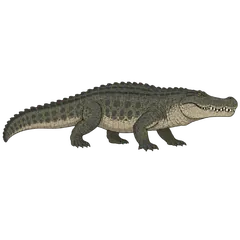
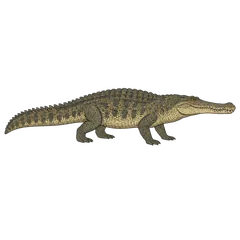
As an adult you would have few enemies apart from bigger members of your own kind. The menu would include large fish, squid-like cephalopods, ichthyosaurs, other plesiosaurs and probably the marine crocodile relatives of the time. A study of the skull of a related plesiosaur suggest they could ‘smell in stereo’: water flowed in through the internal nostrils and out through the external ones, which may have helped them work out the direction of a scent. Bite marks on the bones of other marine reptiles show that big pliosaurs could dismember prey too large to swallow whole, probably by twisting their bodies like modern crocodiles.
Like other plesiosaurs it almost certainly gave birth at sea. And as an air-breather, you would have to surface between dives – a moment when even a top predator is exposed to rivals.